BMW 2 Series (2020 to 2026): Which Used Model Should You Buy in the UK?
A used BMW 2 Series is one of those cars that can feel like a treat without needing supercar money. It’s compact, smart inside, and often more fun to drive than you’d expect from a “small premium” badge.
Used BMW 2 Series Finance
This guide is for UK buyers looking at model years 2020 to 2026. You’ll learn which body style suits your day-to-day life, which engines make sense for your mileage, what changed year by year, and how to buy without nasty surprises. It also covers two things that save a lot of stress: choosing dealer vs private, and getting finance sorted early.
BMW 2 Series explained, which body style fits your life?
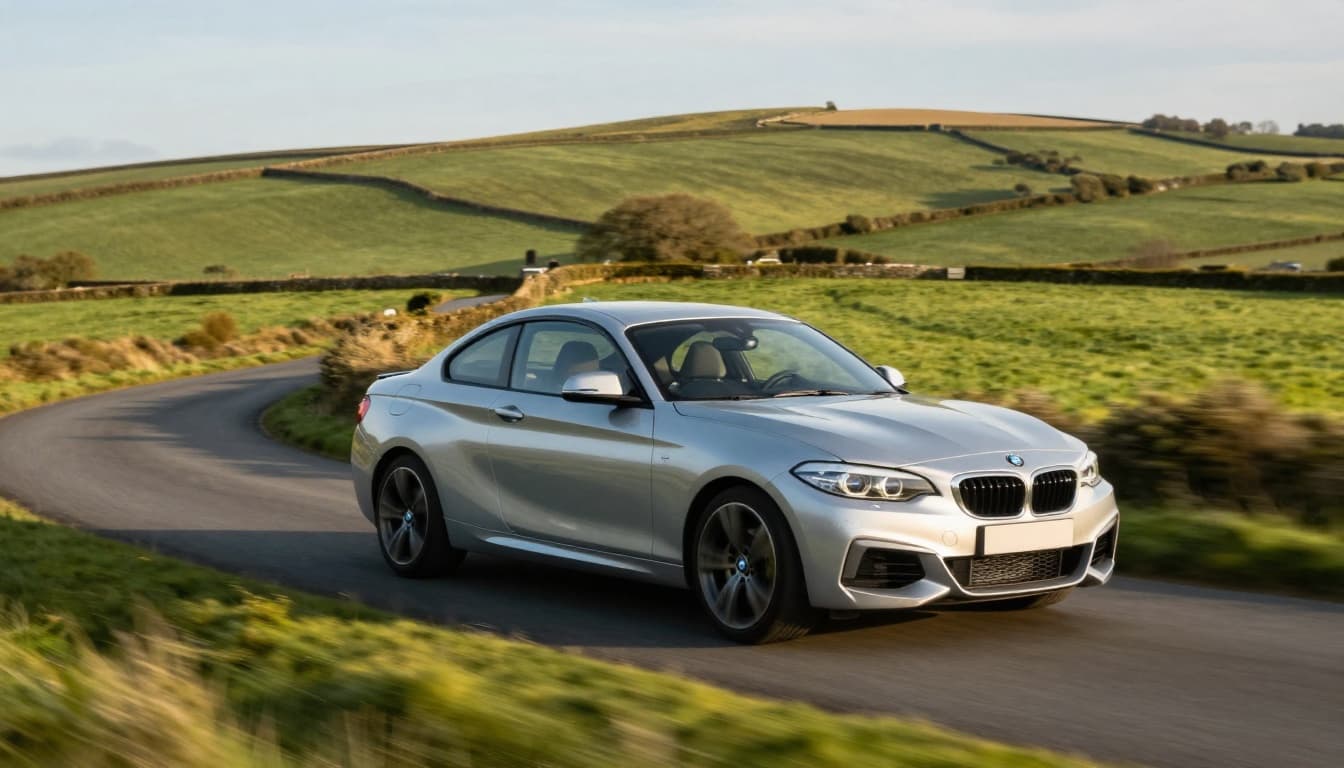 The BMW 2 Series Coupe on a country road, created with AI.
In used listings, “BMW 2 Series” can mean three very different cars. The badge is similar, the vibe is not.
- 2 Series Coupe: the classic choice if you care most about driving feel. It’s the one that tends to feel the most focused from behind the wheel.
- 2 Series Gran Coupe: the sleek, four-door option. It’s aimed at buyers who like the sporty look but need easier access to the back seats.
- 2 Series Active Tourer: the practical one. It’s taller, easier to get in and out of, and works better for families and bulky stuff.
Trims and option packs can get confusing fast, so start with your needs (space, doors, ride comfort, parking) and only then pick the badge and spec.
Coupe vs Gran Coupe vs Active Tourer, the quick difference
- Doors and access: Coupe has two doors, Gran Coupe and Active Tourer have four, which matters a lot with kids or frequent passengers.
- Boot access: Coupe and Gran Coupe boots are more “saloon-like”, the Active Tourer has a hatchback-style opening for bulky loads.
- Rear seat space: Active Tourer usually feels roomier in the back, Gran Coupe is a middle ground, Coupe is the tightest.
- Driving feel: A BMW 2 Series Coupe used often feels the sharpest, the Active Tourer prioritises comfort and ease.
- Ease of parking: All are compact, but the taller Active Tourer can be easier to place at low speed, while the Coupe’s long doors need space to open.
- Style vs function: A 2 Series Gran Coupe suits buyers who want the sporty look with fewer compromises, a 2 Series Active Tourer used UK suits buyers who want space first.
Petrol, diesel, mild hybrid, plug-in hybrid, what to choose in the UK
Your fuel choice should match your regular journeys, not your “best case” plan.
Petrol suits short trips, mixed driving, and lower annual mileage. It’s also a safe bet if you do lots of stop-start work, like school runs and local errands.
Diesel can still make sense for high motorway miles, but it needs the right routine. Modern diesels use a DPF (diesel particulate filter) that likes longer, hotter runs. If most of your trips are short, you’re more likely to run into warning lights and forced regens.
Mild hybrid (often shown as “mild-hybrid” or similar) is not a full hybrid. It can help smooth stop-start and improve efficiency a bit, but it doesn’t usually drive on electric power alone. Think of it as a helper, not an electric car.
Plug-in hybrid (PHEV) works best if you can charge regularly, ideally at home or work. If you don’t charge, you carry extra weight and you’ll often see worse economy than you hoped. It can also be a smart pick if you drive into emissions-restricted zones, but only if the car is used as intended.
Used BMW 2 Series review by year, what changed from 2020 to 2026
Across 2020 to 2026, the 2 Series range becomes more split by purpose. One path is driver-focused (Coupe), the other leans towards everyday ease (Gran Coupe and Active Tourer), with tech and efficiency improving as you move into later model years.
Use the year as a shortcut for likely tech, warranty balance, and day-to-day features, but always verify the exact spec. BMW options vary wildly, even between two cars registered months apart.
2020 to 2021 models, good value, but check spec carefully
Early cars often offer the best value because you’re letting someone else take the big first drop in price. You’ll also find a wider spread of trims and engine choices.
The catch is equipment. One 2020 car might feel fully loaded, another can feel basic. On your shortlist, look for:
- Heated seats (nice to have, and helps resale)
- Front and rear parking sensors (rear-only can feel stingy on a premium car)
- Reversing camera (very handy in tight UK bays)
- Adaptive cruise control (great for motorway users)
- Apple CarPlay and Android Auto (check both, not all cars have both)
If a car doesn’t have the features you’ll use daily, it won’t feel like a bargain for long.
2022 to 2024 models, newer tech and stronger everyday usability
This middle group often hits the sweet spot. You’ll typically notice sharper screens, more digital driver displays, and more common safety assists depending on trim.
Efficiency can also improve, especially on versions that get updated engines or mild-hybrid help. Still, don’t assume anything from the registration year alone. Two “same year” cars can have very different driver aids, lights, audio, and parking kit.
If you value convenience, prioritise cars with the parking tech you’ll actually use, plus the infotainment you find easy and quick.
2025 to 2026 models, latest features, higher prices, choose based on needs
Later model years usually bring fresher software, the newest driver-assist menus, and a more “current” feel inside. You may also find a better remaining warranty position, depending on the car and how it was registered.
The trade-off is price. A newer plate can push monthly costs up fast, so compare the total cost of ownership, not just the payment. A slightly older, well-specced car can be the smarter buy than a newer one with fewer features.
What to check before you buy a used BMW 2 Series
A 2 Series is not fragile, but it is a premium car, and it rewards careful shopping. A clean history and a tidy test drive matter more than a shiny advert.
Start with the basics: check the MOT history, check service records, and confirm the tyres match and have sensible tread. Then drive it properly, including rough roads and a bit of dual carriageway.
Service history and maintenance, the easiest way to spot a cared for car
“Full service history” should mean regular servicing in line with the car’s schedule, with proof. A stamped book is fine, but stamps plus invoices are better because you can see what was done.
Look for signs the owner didn’t cut corners:
- Oil services done on time (missed oil changes can shorten engine life)
- Brake fluid and other routine items not ignored
- Matching tyres, or at least matching tyres on each axle
- Even tyre wear (odd wear can hint at alignment issues)
If the seller can’t explain gaps, assume you’ll be the one paying later.
Test drive checklist for the 2 Series, comfort, handling, and warning signs
Keep it simple and systematic:
- Start it from cold and listen for rattles
- Check idle feels smooth, not lumpy
- Try gentle and firm acceleration, it should pull cleanly
- Steering should feel straight, not drifting or vibrating
- Gearbox should shift smoothly (auto or manual)
- Brake firmly once or twice, no steering shake or pulsing pedal
- Drive over bumps, listen for knocks from suspension
- Test parking sensors, camera, infotainment, Bluetooth, and navigation
- Check heating and air con work properly
Many 2 Series cars run on run-flat tyres. They can feel firmer, so don’t confuse a stiffer ride with a fault. Still, harsh crashing over potholes can also mean worn suspension or oversized wheels.
Ownership costs to plan for, fuel, tyres, insurance group, and servicing
Budget like you would for a premium car, because that’s what it is.
Tyres can be the big surprise. Larger wheels and run-flats often cost more, and performance versions can go through rear tyres quicker. Insurance groups can also rise sharply with sporty trims or bigger engines.
Servicing costs depend on where you go and what’s due, so set aside a maintenance pot. You’ll enjoy the car more when a set of tyres doesn’t feel like a disaster.
Buy smarter in the UK, dealer vs private, and why to sort finance first
How you buy matters almost as much as what you buy. The best-looking car can still be the wrong deal if the paperwork and protections aren’t there.
Why a reputable dealer can be safer than a private sale
A reputable dealer usually gives you stronger consumer rights, clearer paperwork, and a proper route back if something goes wrong. Many also include a warranty option, and they tend to carry out pre-sale checks.
Private sales can be cheaper, but they’re also “sold as seen” in practice. If a fault appears later, you may have little comeback. Paying a bit more at a dealer can be a fair trade for lower risk, especially on a modern premium car packed with electronics.
Arrange car finance before choosing the exact car, here is why it helps
Sorting finance early stops you shopping with guesses. When you know your budget, deposit, and likely repayments, you can move quickly and avoid stretching for the wrong car.
Two common options are:
- PCP (Personal Contract Purchase): lower monthly payments are common, with choices at the end (hand it back, pay the final amount to own it, or part-exchange).
- HP (Hire Purchase): you pay off the full value over the term, and you own the car at the end.
Before you commit, focus on the numbers that matter: deposit, term length, APR, and the total amount payable. A low monthly figure can hide a costly deal.
Conclusion
The BMW 2 Series suits UK drivers who want a premium cabin in a smaller footprint. Pick the Coupe for driving fun, the Gran Coupe for style with extra doors, and the Active Tourer for real-world space.
Keep it simple: shortlist the right 2020 to 2026 years for your budget, check history and spec carefully, take a proper test drive, and buy through a reputable dealer where you can. Then compare finance options and set a clear budget before you start viewing cars, it keeps every decision sharper.
Used BMW 2 Series Finance
Shop for More with Our Verified UK Insurance providers:
Home Emergency Cover Home Appliance Cover– Income Protection insurance
Travel Insurance – Gadget Insurance – Phone Insurance – Caravan Insurance – Cycle Insurance – E-Bike Insurance
Car Finance – Car Breakdown Cover – Van Breakdown Cover – Motorbike Breakdown Cover
–
Explore our Buyers Guides with Money Saving Tips
For a list of our main buyers guides use the drop-down menu at the top of the page. Topics related to this article are:
Laptop Insurance Buyers Guides
Gadget Insurance Buyers Guides
Tennant’s Insurance Buyers Guide
Landlords Insurance Buyers Guide
Home Emergency Cover Buyers Guide
Travel Insurance Buyers Guides
Car Breakdown Cover Buyers Guide
–


Comments
Post a Comment