Conservatory Furniture That Works in Real UK Homes (Comfort, Materials, Layout)
A conservatory can feel like the best seat in the house, until it’s too hot to sit in, too chilly to relax, or a bit damp around the edges. That mix of bright sun, changing temperatures, and the odd patch of condensation makes conservatory furniture a different buy from living room pieces.
Find Conservatory Furniture
Get it right and the room becomes your easy everyday space for coffee, reading, family chats, or even a bit of work. Get it wrong and you’ll end up with faded cushions, wobbly chairs, and a layout that never feels quite usable.
This guide keeps it practical, so you can choose the right materials, sizes, and set-up for how you actually live.
Start with how you use your conservatory (and what the room is really like)
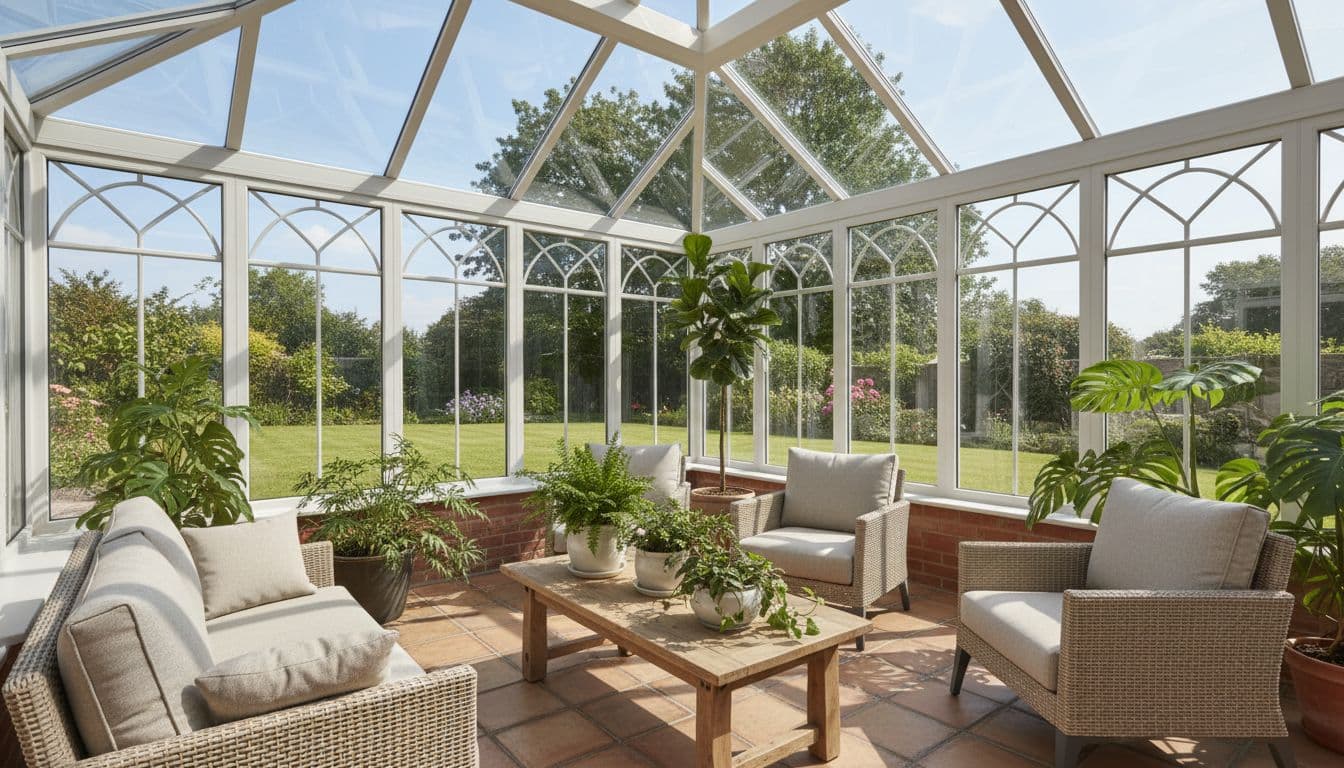 An inviting conservatory layout with light, practical seating and greenery, created with AI.
Before you look at sofas or dining sets, decide what the room is for most days. Otherwise, it’s easy to buy something that looks great online but never suits your routines.
A quick set of prompts helps you shop with fewer mistakes:
- How many people use it at once, and is it daily or occasional?
- Kids or pets in and out, with muddy paws or snack spills?
- How much sun hits the seating area in the afternoon?
- Does it feel damp in winter, or do you get condensation on the glass?
- Ventilation: do windows open easily, and do you actually open them?
- Storage needs: where will throws, toys, paperwork, or plant bits go?
- Floor comfort: is it level, does it feel cold underfoot, and will chair legs slide?
Be honest. A conservatory that’s a “summer-only” room can take lighter furniture choices, but a year-round space needs tougher materials and easier heating comfort.
Common conservatory set-ups: lounge, dining, reading nook, or home office
The best set-up is usually the simplest one, built around one main use.
Lounge set-up: A compact 2-seater sofa (or love seat) plus one armchair works in most UK conservatories. Add nesting tables so you can move surfaces around without crowding the floor.
Dining set-up: A round table often suits tight spaces because you can walk around it more easily. Pair it with chairs you don’t mind wiping down after meals.
Reading nook: One supportive armchair, a small side table, and a good floor lamp can be enough. If your conservatory gets strong glare, plan for blinds and a shaded corner.
Home office: A slim desk against an internal wall can reduce screen glare and cold drafts from glass. Pick a chair that supports your back, not a dining chair that looks nice but feels hard after an hour.
If you’re trying to do two jobs in one room, pick a “primary” and a “secondary”. For example, a lounge space with a small fold-away desk is easier than cramming in a full workstation and a full sofa suite.
Measure once, plan properly: doors, radiators, and walkways
Measuring isn’t just about whether a sofa fits the room. It’s also about whether it fits through the house to get there, and whether the room still works once it’s in place.
A few plain rules help:
- Keep a clear path from door to door, so you’re not sidestepping furniture.
- Check chair pull-out space for dining. You need room to sit down without scraping the wall or glazing.
- Don’t block airflow from vents or radiators, and leave space for windows to open.
- Measure access points (internal doors, patio doors, narrow hallways) as well as the room itself.
If your conservatory has a radiator, don’t push seating right up against it. Heat needs space to circulate, and fabrics pressed against warm surfaces can dry out and fade faster.
Choose the best conservatory furniture materials for sun, heat, and damp
Conservatories can be harsh on furniture. UV light can fade finishes and fabrics, summer heat can dry out natural fibres, and winter condensation can encourage mould if cushions stay damp.
When you compare options, look for straightforward label cues like UV resistance, rust-proof fixings, and water-resistant cushions. These claims don’t guarantee perfection, but they usually point to products designed for brighter, changeable rooms.
Here’s a simple starting point when weighing up common materials:
Material typeWhy it suits a conservatoryWatch-outsSynthetic weave (rattan-style)Handles light, wipes clean, often stable in temperature swingsCheaper weaves can fade, cushions still need dry storageNatural rattan/wickerWarm, traditional look, lighter to moveCan dry out, crack, and fade in strong sunPowder-coated aluminiumLightweight, rust-resistant, easy careCan feel cold to touch in winter, cushions needed for comfortSteel (coated)Sturdy feel, often lower costIf coating chips, rust can follow in damp roomsWood (treated)Cosy look, softer feel than metalCan fade, move with moisture, needs careGlass tabletopsLight look, easy to wipeFingerprints, glare, can get hot in direct sun
The right choice depends on how your conservatory behaves in different seasons, not just the style you like.
Rattan, wicker, and synthetic weave: what lasts best in a conservatory
People often say “rattan” when they mean two different things: natural rattan (a plant fibre) and synthetic weave (man-made fibres formed to look similar).
Natural rattan and wicker can look lovely in a bright room, but strong sun can dry it and make it brittle over time. If your conservatory is south-facing, you’ll need to keep it out of direct sun or accept that it may age faster.
Synthetic weave is usually the safer bet for year-round use. It tends to cope better with UV light and won’t dry out in the same way. It’s also easier to wipe clean, which matters if the room doubles as a family space.
Cushions are often the weak point, not the frame. Look for:
- Removable covers, ideally washable
- Quick-dry foam or fillings that don’t hold water
- A plan for dry storage, because even “outdoor” cushions can get musty indoors if they stay damp
If the conservatory gets condensation, store cushions off the floor in winter. A simple lidded bench, a cupboard, or even breathable bags can help.
Wood, metal, and glass: style vs maintenance (and avoiding warping or rust)
Wood brings warmth, but it can react to the conservatory environment. Changes in temperature and moisture can cause slight movement, and strong light can fade finishes. If you like the look, go for treated wood and keep it away from cold glazing where condensation forms.
Metal furniture can be perfect in a conservatory because it stays stable. The key is the type:
- Powder-coated aluminium is lighter to move and less likely to rust.
- Steel can be strong and good value, but inspect the coating. Any chips or scratches can become rust spots in a damp room.
Glass tabletops suit smaller conservatories because they keep the room feeling open. Choose safety glass where possible, and remember that a table in direct sun can get hot to the touch. A simple runner or placemats can make it more comfortable in summer.
Care doesn’t need to be a project. A soft cloth, mild cleaner, and quick checks for rust spots or loose screws go a long way.
Upholstery that copes with light and spills: fabrics, faux leather, and slipcovers
Upholstery in a conservatory faces two main enemies: sun fade and everyday mess.
Colourfast fabrics and washable covers make life easier, especially with kids, pets, or snack-heavy afternoons. Paler shades can show marks, but they also hide fading better than deep colours, which can bleach unevenly in strong sun.
Faux leather is easy to wipe, but it can feel sticky in warm weather. If your conservatory runs hot, a breathable fabric usually feels nicer on bare arms.
Slipcovers are a smart option if you like changing the look. They also let you wash and refresh the room without replacing the whole sofa.
If the room gets damp in winter, avoid fabrics that hold moisture. Whatever you choose, plan for airflow around seating, and don’t push soft furniture tight against cold glass.
Pick pieces that fit the space, look right, and feel comfortable
A conservatory can trick the eye. All that glass makes it feel bigger than it is, until you place bulky furniture and the room suddenly feels tight.
Try to choose fewer, better pieces. You want enough seating to use the room, but not so much that you lose the calm, open feel that makes conservatories special.
Comfort basics worth checking:
- Seat depth: deep seats are great for lounging, but not everyone likes climbing out of them.
- Back support: a slightly firmer back suits reading and chatting.
- Table height: coffee tables should sit low enough to reach easily, dining tables should leave enough knee room with the chair pushed in.
If the room sounds echoey, soft items matter. A rug, cushions, and curtains or blinds can reduce that hollow feel and make the space more inviting.
Best furniture for small conservatories: slim profiles, corner seating, and fold-away options
Small conservatories work best with pieces that don’t visually block the room.
Slim, practical options include armless chairs, a love seat, or a bench with storage tucked along one side. Corner seating can also make sense, but only if it doesn’t block doors or windows you use often.
Fold-away ideas help if the room has mixed use:
- Drop-leaf tables for occasional dining
- Stackable chairs that can live in a corner
- Nesting tables that spread out when guests arrive
A simple layout tip that works in many UK conservatories: keep the biggest piece (sofa or bench) against an internal wall if you have one, then float lighter chairs near the glazing. This keeps walkways open and avoids pressing fabrics against cold glass.
Make it feel finished: rugs, cushions, lighting, and plants (without clutter)
Conservatories often look “nearly done” because hard floors and glass can feel a bit bare. Soft finishing touches make a big difference, as long as they don’t turn into clutter.
Rugs add warmth underfoot and help define zones (lounge vs dining). Choose one that can cope with temperature changes and the odd bit of damp, so it doesn’t curl at the edges.
Cushions and throws make seating feel cosy, but keep it manageable. Two or three cushions per seat is usually plenty, and washable covers save hassle.
Lighting matters more than people expect. A conservatory can be bright in the day, then feel flat at night. A floor lamp plus one warm table lamp can create a relaxed evening feel without harsh glare.
Plants suit conservatories, but place them with care. Don’t block vents or crowd the main seating, and leave space so you can open windows easily for airflow.
Budget, care, and value: how to buy conservatory furniture that lasts
Value in conservatory furniture isn’t about paying the most. It’s about choosing pieces that won’t fail after one summer of sun or one winter of condensation.
If you’re balancing budget and durability, spend more on:
- A stable frame that won’t wobble
- Better cushion construction and covers
- Finishes that resist rust and fading
Save money by keeping the set-up smaller. A well-chosen sofa and two flexible tables often beats a full matching set that fills the room.
Quick buying checklist: warranties, cushion quality, finishes, and spare covers
Use this as a final scan before you buy:
- Frame stability: does it feel solid, with no flex?
- Rust-resistant fixings: especially on metal frames
- UV-resistant weave or fabric: helpful for bright rooms
- Removable covers: ideally washable
- Cushion quality: does it bounce back, or flatten fast?
- Replacement parts: can you get spare covers or cushions later?
- Weight: can you move it to clean, or shift for summer shade?
- Storage: can cushions be stored easily in winter?
If you can, sit on it for a few minutes. Comfort issues don’t show up in a quick perch.
Easy maintenance and seasonal tips: preventing fading, mould, and wobble
A little routine care keeps conservatory furniture looking good.
Rotate cushions now and then, so one side doesn’t fade more than the other. Use blinds or shades during strong sun, especially on the brightest afternoons.
In cooler months, wipe away condensation and allow airflow. Avoid placing furniture right against cold glass, because trapped moisture can lead to musty smells and marks.
Every so often, tighten screws and check feet or pads under chair legs. These small fixes stop the slow creep into wobble, squeaks, and scratched floors. Store cushions somewhere dry when you’re not using the room much, and bring them out when you’ll enjoy them.
Conclusion
Conservatories can be the brightest room in the house, but they ask more of your furniture. Decide the room’s purpose first, measure carefully, then choose materials that cope with sun and damp. Focus on comfort, easy cleaning, and a layout that leaves you space to move. A simple plan works best: measure, set a budget, pick your materials, then build a calm layout with just the pieces you’ll use.
Shop Conservatory Furniture
Shop for Furniture for your Home from Verified UK Retailers
Furniture for your Home Sofas Sofa Beds
Bedroom Furniture Beds & Mattresses
Shop for Furniture for your Garden, storage and Garden Rooms
Garden Furniture Garden Storage Gas BBQ’s Outdoor Kitchen Garden Decor Gardening Supplies
Garden Sheds Prefab Garden Rooms Garden Rooms with UK Installation
Pergolas Gazebo Greenhouse Canopies Awnings Conservatories
–
Explore More Expert Buyers Guides & Money Saving Tips
For a list of our main buyers guides use the drop-down menu at the top of the page. Topics related to this article are:
Home and Garden Furniture Buyers Guides
Bedroom Furniture Buyers Guides
living Room Furniture Buyers Guides
Garden Furniture Buyers Guides
–


Comments
Post a Comment