Boiler breakdowns and home emergency cover: what’s usually paid for. Get a Quote
Boiler breakdowns and home emergency cover: what’s usually paid for (and what’s not)
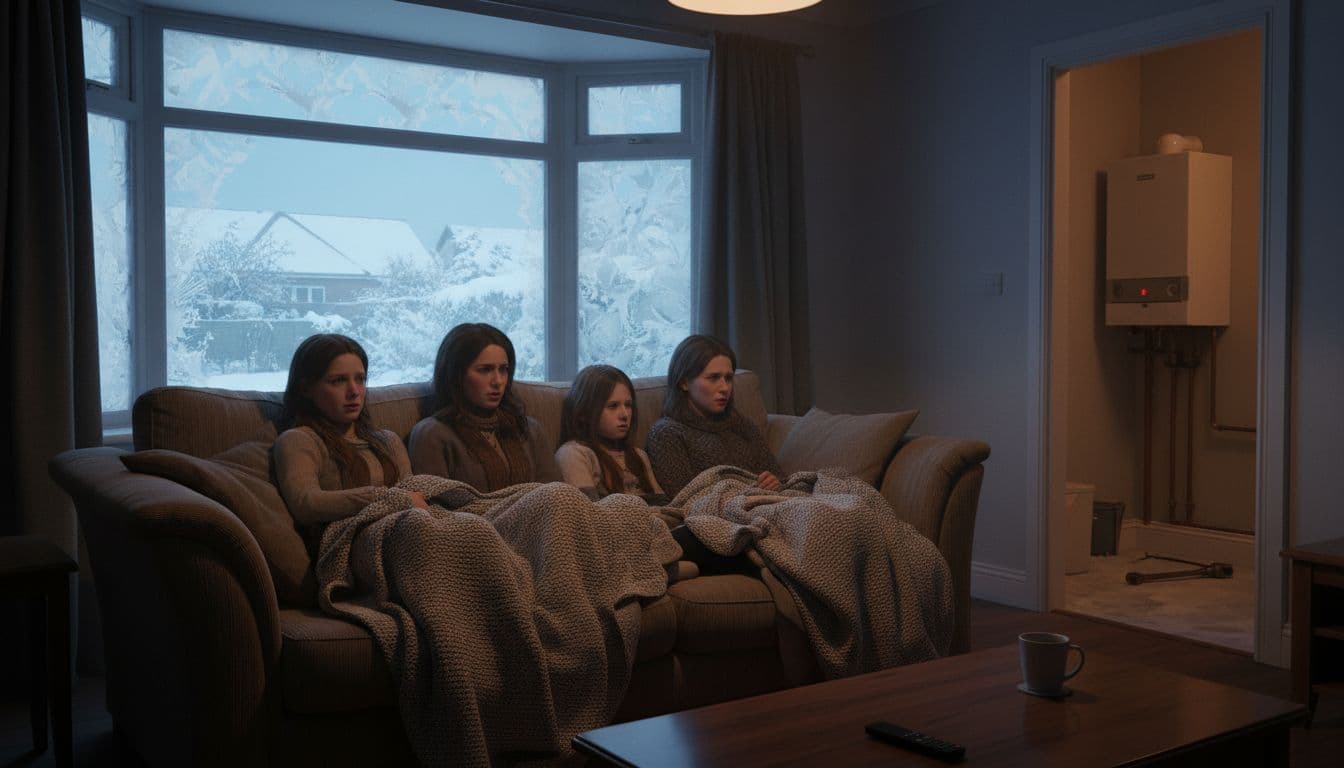 An unheated home is stressful fast, this image shows a typical winter boiler breakdown scenario, created with AI.
It’s a familiar winter moment. You wake up, the house feels like a fridge, the taps run cold, and the boiler flashes an error code you’ve never seen before. You can’t shower, the radiators are dead, and you’re suddenly working out how quickly you can get someone out.
Find Boiler Breakdown Cover
This is where home emergency cover is meant to help. In plain terms, it’s a policy add-on (or standalone plan) that aims to send an approved trade out quickly when a sudden emergency hits essential services, like heating, hot water, electricity, or plumbing.
People often mix it up with boiler service plans and standard home insurance. That mix-up can cost you, especially when a claim is refused. This guide explains what home emergency cover usually pays for (call-outs, parts, labour), what often gets excluded, and how to avoid nasty surprises when you need help most.
Boiler breakdowns and home emergency cover, what it is and when it helps
Home emergency cover is designed for rapid response when something breaks suddenly and it affects safety or basic living. Think of it like an emergency mechanic for your home. It’s there to get you out of trouble, not to keep the whole system in perfect shape year-round.
Most UK policies include a 24/7 helpline and access to a network of engineers. The aim is typically to restore essentials quickly (or make the situation safe) within set policy limits.
It can suit:
- Homeowners who want help with urgent repairs without paying a large call-out fee upfront.
- Landlords who need to restore heating and hot water quickly for tenants (and meet repair duties).
- Tenants, sometimes, but only where the tenant is responsible for the boiler or where the cover is bundled with another product they hold (check your tenancy agreement before you pay for anything).
A key point: home emergency cover usually focuses on the immediate fix. If your boiler needs a bigger job, or the fault is caused by wear over time, the insurer may do only what’s needed to make it safe, then stop.
What counts as a boiler emergency, and what usually does not
Policies vary, but insurers often treat these as boiler emergencies:
- Total loss of heating or hot water, especially in cold weather.
- Uncontrolled leaks from the boiler or heating system that risk damage or safety issues.
- Dangerous faults, for example where the boiler has shut down due to a safety device, or there are signs you should stop using it.
- Complete boiler failure, where it won’t run at all.
In contrast, these are often classed as non-emergencies:
- A boiler that’s working but not very efficient.
- Noisy operation, banging, kettling, or humming (unless linked to a clear safety issue).
- Low pressure you can top up yourself, if the system allows it and it’s safe to do so.
- Routine servicing, annual checks, and general maintenance.
- Cosmetic issues, loose covers, or minor drips that don’t create an urgent risk.
Some providers may prioritise vulnerable households (for example, if someone is elderly, very young, or medically dependent on warmth). Even then, priority rules are policy-specific, so don’t assume it’s automatic.
Home emergency cover vs boiler cover vs home insurance, quick differences
These products overlap, but they’re not the same. Here’s a quick way to separate them.
ProductWhat it’s forWhat it usually won’t doHome emergency coverFast help to restore basics (heating, hot water, electrics, plumbing)Full system upgrades, maintenance, gradual wearBoiler cover or service planOngoing care, servicing, and boiler-specific repairsWider home emergencies (unless added), major home damage claimsBuildings/contents insuranceBig events and damage (fire, flood, escape of water), repairs after an insured incidentQuick fixes, breakdowns, and routine repair bills
People get caught out when they assume “I have home insurance, so I’m covered”. In many cases, home insurance is about damage caused by an event, not the cost of an engineer diagnosing why the boiler has stopped working.
What home emergency cover usually pays for, call-outs, labour, parts, and limits
Most UK home emergency policies follow a similar journey. You call the helpline, they triage the issue, then they send an approved engineer (or authorise one) to diagnose and fix the fault. What they’ll pay depends on three big buckets: call-out and labour, parts, and policy limits.
Before you need to claim, find the “schedule of cover” or key facts. It should show:
- Maximum payout per claim (often called a limit per incident).
- Any annual cap.
- Your excess (what you pay towards each claim).
- Which trades are included (gas and heating, plumbing, electrics, drains).
- Any conditions, like servicing requirements or boiler age limits.
Call-out fees and engineer time, what is normally included
Many policies include the initial call-out and a set amount of labour to diagnose and carry out the repair. If the fix is quick, you might pay only your excess, or sometimes nothing at all, depending on the plan.
Response targets are often stated (for example, attending within a set number of hours). In practice, these can depend on engineer availability, weather, and location. Some wordings describe targets rather than guarantees, so read the wording carefully.
Also watch for how “claims” are counted:
- Some policies charge an excess per claim, so two separate call-outs can mean two excess payments.
- Repeated visits for the same fault might be treated as one claim if it’s part of the same repair, or multiple claims if the policy defines each attendance as a separate incident.
If you’re tempted to book your own engineer, check the policy first. Many plans require authorisation, and they may refuse to reimburse unauthorised work unless there’s a clear exception in the terms.
Parts and repairs, what is often covered, and common claim limits
When a boiler breaks down, parts are usually the big cost. Home emergency cover commonly pays for replacement of failed components where the part is available and the fault is sudden.
Often-covered items can include:
- Pumps, motorised valves, pressure sensors
- Thermostats, diverter valves, printed circuit boards (PCBs)
- Fans, ignition components, basic controls
But even when parts are covered, limits matter. Many policies have:
- A maximum payout per incident, which can be hit quickly if a major part fails.
- An annual cap, which can bite if you have more than one emergency in a year.
- Limits on what’s considered “reasonable” for parts and labour.
Another common snag is availability. If your boiler is older, parts may be obsolete or hard to source quickly. In that case, a policy may:
- Offer a cash contribution up to the policy limit, rather than fitting a full replacement boiler.
- Class the repair as not possible within the emergency terms, and stop after making safe.
In most cases, home emergency cover is about repair, not replacement. If you want cover that includes boiler replacement, you’ll usually need a more specialist boiler plan, and even then, replacement may be capped or conditional.
Temporary fixes and making the home safe, what insurers may authorise
If the engineer can’t complete a proper repair on the first visit, insurers often authorise “make safe” work. This means stopping immediate risk and preventing things getting worse.
Typical make safe actions include:
- Isolating the boiler or heating circuit
- Stopping a leak, capping pipework, tightening joints
- Basic temporary repairs to prevent damage or danger
This can feel frustrating, but it’s often how policies are built. The emergency part is the urgent safety fix. The follow-up job may be booked later, or it may be classed as outside cover if it’s considered a non-emergency improvement.
Temporary alternative heating or hot water (like portable heaters) is not always included. Some policies may offer it as an optional extra, others don’t. If it matters to you, check before buying.
Boiler cover exclusions and grey areas that often lead to declined claims
Exclusions are where most boiler breakdown disputes start. The wording can feel picky, but it’s how insurers keep emergency cover affordable. The big themes are wear and tear, pre-existing faults, access, and work that’s really maintenance or an upgrade.
If you only read three things in your documents, read the definitions for “emergency”, “breakdown”, and “pre-existing”.
Wear and tear, poor maintenance, and pre-existing problems
Most home emergency cover won’t pay for gradual decline. If the engineer’s report suggests the boiler failed due to long-term wear, the claim may be refused.
Common excluded causes include:
- Corrosion, sludge build-up, and blocked heat exchangers
- Limescale damage (a bigger issue in hard water areas)
- Leaks caused by deterioration rather than a sudden break
- Faults that were happening before the policy started, even if you didn’t realise the cause
Servicing is a frequent grey area. Some policies require the boiler to be serviced in line with the manufacturer’s guidance, or at least kept in good repair. Missing records can complicate things, especially if the insurer asks for proof that the system has been looked after.
A useful rule of thumb: if the boiler has been “a bit off” for weeks, it’s less likely to be treated as a sudden emergency.
Age limits, non-standard boilers, and parts that are hard to source
Home emergency cover can have boiler age caps or restrictions, especially for older models and specialist systems. Even when the policy doesn’t set a strict age limit, it may limit what it will pay if parts are not available quickly.
You may see restrictions around:
- Older boilers with limited parts availability
- Non-standard systems that need specialist engineers
- Systems in outbuildings, annexes, or unusual set-ups (definitions vary)
If the engineer can’t source parts, your cover may stop at a cash contribution, or the make safe visit may be all you get. Replacement boilers are commonly excluded, or only partly contributed to, so don’t assume a new boiler is on the table.
Access issues, secondary damage, and work that is not the insurer’s job
Even when the boiler fault is covered, the surrounding work often isn’t. Policies tend to pay for the repair itself, not the building work needed to reach it or tidy up afterwards.
Common exclusions include:
- Removing cupboards, boxing-in, flooring, or tiles to reach pipework
- Redecoration, plastering, and cosmetic repairs after the job
- “Trace and access” work (finding a hidden leak) unless the policy includes it
- Secondary damage, such as water-damaged ceilings or warped flooring, which is often a buildings insurance matter if it’s covered at all
Upgrades also trip people up. If your system needs new pipe runs, a powerflush, or changes to meet updated standards, emergency cover may refuse those costs unless they’re essential to complete the immediate repair.
How to claim smoothly, and how to choose the right home emergency cover for boiler peace of mind
When the boiler fails, stress makes people rush. The quickest route to a paid claim is usually to follow the insurer’s process, keep clear records, and avoid agreeing to extra work before you know what’s covered.
What to do when your boiler breaks down, steps that protect your claim
- Check the basics: thermostat settings, programmer, power supply, and boiler pressure (only if you know it’s safe to do so).
- Note any error codes and what the boiler is doing (or not doing).
- If you suspect danger (burning smells, gas smell, or signs of overheating), turn it off and ventilate the area, then seek urgent help through the right channels.
- Call the insurer helpline first before booking your own engineer, unless your policy clearly allows emergency self-arranged repairs.
- Take photos of leaks, error codes, and any visible damage.
- Keep notes of times, names, and what you were told.
- Ask for a job report showing the fault, what was done, and any parts fitted.
Unauthorised repairs are a common reason for non-payment. Even if your engineer is excellent, the insurer may insist on using their network, or require pre-approval.
Policy checklist, the key questions to ask before you buy
A good policy is the one that matches your home and your boiler, not the one with the lowest monthly price. Compare using a short checklist:
- Per-claim limit and annual cap, are they realistic for boiler parts and labour?
- Excess amount, and is it per claim or per year?
- Call-out limits, is there a maximum number per year?
- Stated response times, and how they’re described (target vs guaranteed).
- Any boiler age limits or restrictions for your type of system.
- Whether parts are fully covered or capped, and what happens if parts are obsolete.
- Any contribution towards replacement, and the exact conditions.
- Whether “trace and access” or reasonable access clauses could block your claim.
- Cover for related items, like controls, radiators, and pipework, not just the boiler box.
- Can you choose your own engineer, or must you use their network?
For value, avoid paying twice. Some homeowners already have boiler support through a service plan, or a separate maintenance agreement. Also set your excess to match your savings. If you could comfortably pay £100 to £200 for a call-out, a higher excess might reduce your premium, but only if it still makes sense when you claim.
Conclusion
Boiler breakdowns feel urgent because they are. Home emergency cover can be a lifesaver for quick call-outs and repairs, but it isn’t a blank cheque. Before you rely on it, check three things: your claim limits, what parts and labour are included, and the exclusions around wear and tear and access. Take ten minutes to review your documents, confirm who’s responsible (owner vs tenant), and compare policies based on your real risks, not just the price.
Boiler Breakdown Cover
Shop for More with Our Verified UK Insurance providers:
Home Emergency Cover Home Appliance Cover– Income Protection insurance
Travel Insurance – Gadget Insurance – Phone Insurance – Caravan Insurance – Cycle Insurance – E-Bike Insurance
Car Finance – Car Breakdown Cover – Van Breakdown Cover – Motorbike Breakdown Cover
–
Explore our Buyers Guides with Money Saving Tips
For a list of our main buyers guides use the drop-down menu at the top of the page. Topics related to this article are:
Laptop Insurance Buyers Guides
Gadget Insurance Buyers Guides
Tennant’s Insurance Buyers Guide
Landlords Insurance Buyers Guide
Home Emergency Cover Buyers Guide
Travel Insurance Buyers Guides
Car Breakdown Cover Buyers Guide
–


Comments
Post a Comment