Bulgaria Holidays: Beaches, Cities, Skiing, and Easy Travel Tips Book Spring 2026
Bored of paying top prices for a holiday that feels like every other one? Bulgaria holidays are a smart pick for UK travellers who want more for their money without a long flight.
Find Holidays in Bulgaria
It’s short-haul, easy to plan, and full of variety. One trip can cover lazy Black Sea beach days, cobbled old towns, big mountain views, and meals that don’t leave you wincing at the bill.
This guide keeps it practical for first-time visitors. You’ll find the best places to go, when to travel, what things cost in real life, how to get around, what to eat, safety basics, and two simple itineraries you can copy.
Why choose Bulgaria for your next holiday from the UK?
Bulgaria works because it’s flexible. You can book a classic summer beach break, a long weekend in a lively city, or a winter ski trip, all without the long-haul effort.
For UK holidaymakers, it often feels like a sensible swap for pricier Mediterranean favourites. You still get sun, sea, and late nights, but you also get layers of history and proper nature close by. Think Orthodox churches with candlelight, Roman ruins you can walk through, and mountain roads that look like they belong in a film.
Flights from the UK are generally short-haul, which makes it easier for families and anyone who doesn’t fancy losing a full day to travel. In tourist areas you’ll hear plenty of English, but a few basics (hello, please, thank you) go a long way, especially in smaller towns.
What Bulgaria is best for: beach breaks, city weekends, ski trips, and nature
Bulgaria suits different holiday moods, which is handy if you’re travelling with people who can’t agree.
Beach breaks: Long sandy beaches, warm weather in summer, and resorts that are set up for easy days with no fuss.
City weekends: Walkable centres, affordable taxis, museums, cafes, and parks, plus day trips that don’t need intense planning.
Ski trips: Well-known ski areas with ski schools, gear hire, and a social atmosphere, often at prices that feel kinder than the Alps.
Nature and spa time: Mountain hikes in summer, mineral pools, and spa hotels in towns built around hot springs.
If you like a holiday with choices, Bulgaria delivers. You can keep it simple or pack your days without long drives.
Is Bulgaria a good budget holiday? What to expect to pay
Bulgaria is still one of the better value European options for many UK travellers. Meals, local transport, and everyday extras often come in cheaper than in Spain, Italy, or parts of Greece, especially once you step away from the most tourist-heavy strips.
What makes the biggest difference is how you travel. A few habits can keep costs sensible without making the trip feel “cheap”.
Eat where locals eat: Look for busy bakeries, small grill places, and restaurants a street back from the seafront.
Use public transport for simple hops: Buses and metro (in Sofia) can save money fast.
Pre-book popular trips in peak season: Not for discounts, but to avoid last-minute prices and sold-out days.
Travel in shoulder season: Late spring and early autumn often mean better value and less waiting around.
If you’re going in July or August, expect higher prices in beach resorts and a more “holiday factory” feel in the busiest areas. That’s not a deal-breaker, but it helps to pick the right base.
Best places for Bulgaria holidays, by trip type
Choosing where to stay is half the battle. Bulgaria’s main holiday areas feel very different from each other, even when they’re close on the map.
Black Sea coast: Sunny Beach, Nessebar, Sozopol, Varna, and Burgas
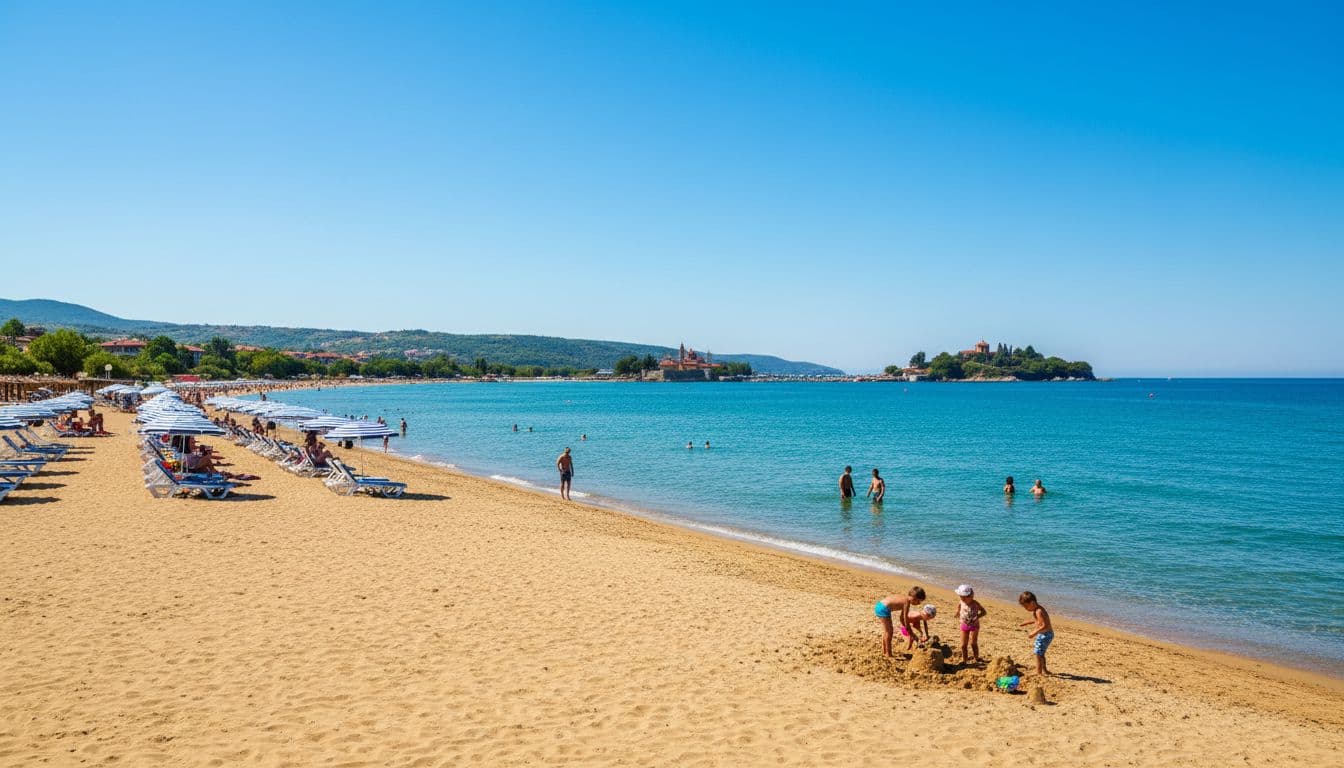 The Black Sea coast on a bright summer day, with wide sand, calm water, and the feel of a classic seaside break, created with AI.
The Black Sea coast is where most UK travellers picture their Bulgaria holidays, and for good reason. It’s built for easy summer living: beaches, promenades, day trips, and plenty of places to eat.
Sunny Beach is the headline act for long stretches of sand and late nights. It suits groups of friends and anyone who wants lots going on. Families can still enjoy it, but it’s worth choosing accommodation slightly away from the loudest areas if you want earlier nights.
Nessebar is a brilliant contrast. It’s known for its historic old town on a peninsula, with stone churches, sea views, and lanes that beg for a slow wander. It’s ideal for couples, mixed-age groups, and anyone who wants a culture day without travelling far.
Sozopol feels prettier and calmer, with a more relaxed vibe and an old town that’s great for evening strolls. It can suit families who want a gentler pace, plus couples who like small restaurants and sea views.
Varna gives you a proper city and a beach in the same place. You can do museums and parks in the morning, then head to the coast later. It’s a good pick if you get restless in resort life.
Burgas often works best as a base. It’s handy for connections, has a city feel, and puts you within reach of nearby coastal spots for day trips.
For families, look out for calmer bays, long promenades for prams, and waterparks when you want a break from the sand. In peak summer, beaches and roads get busy, so plan your main outings early in the day.
Sofia and Plovdiv: easy city breaks with history, food, and day trips
Sofia is a great starter city. It’s laid-back, fairly easy to get around, and mixes big landmarks with normal local life. You can visit churches, museums, and markets, then finish the day in a park with the mountains sitting in the background.
Plovdiv feels warmer and more romantic, even on a quick visit. The old town is the main draw, with colourful houses, galleries, and the Roman theatre. It’s also a strong choice for food and cafes, especially if you like long evenings with a slow pace.
Both cities work well without a car. Public transport is useful, and central areas are walkable once you’re checked in. For day trips, many travellers pair a city stay with a mountain walk, a monastery visit, or a thermal spa day, which keeps the trip varied without complicated logistics.
Mountains and spas: Bansko, Borovets, Pamporovo, and Velingrad
If you’re planning a winter break, Bulgaria’s ski areas are the obvious draw. In summer, these same regions flip into hiking territory, with cooler air and long views.
Bansko is lively, with a busy resort feel and lots of places to eat and drink. It often suits groups and couples who want skiing plus nightlife.
Borovets is a classic choice and can work well for families, especially if you want convenience and a straightforward resort set-up.
Pamporovo is often seen as calmer, with a more relaxed pace that suits families and beginner skiers.
For spa-focused trips, Velingrad is one of the names people look for. It’s known for mineral water and spa hotels, and it’s the sort of place where your main plan is to slow down.
Two practical notes:
- Book ski school early if you’re travelling in school holiday weeks.
- Check snow conditions before you lock in dates, because winters vary year to year.
For spas, pack swimwear and flip-flops, and expect a quieter atmosphere. Keep voices low and follow any pool rules, it makes the experience better for everyone.
When to go to Bulgaria, weather, crowds, and the best time to book
Bulgaria rewards timing. The same place can feel calm and charming in June, then hectic in August. Think about what you want most, then choose your month around that.
Summer school holidays bring the biggest crowds on the coast, along with the highest prices and the fullest restaurants. Cities can feel hot in mid-summer, so spring and autumn often suit sightseeing better.
If you can travel outside peak weeks, you’ll usually get more space, more choice, and a more relaxed mood.
Best time for a beach holiday on the Black Sea
For a Black Sea beach break, late spring through early autumn is the main window.
July and August tend to be the hottest and busiest, with the strongest “resort season” feel. If you like lively evenings and lots happening, that can be a plus. If you prefer space on the sand and easier restaurant bookings, aim for early summer or early autumn.
Sea temperatures are usually warmest later in summer, so late August and early September can be a sweet spot for swimming with slightly less intensity on shore.
Best time for skiing and winter breaks in Bulgaria
Ski season typically runs through the winter months, but conditions change each year. Christmas and February half-term are popular, so book earlier if those weeks are your only option.
Pack for contrast. Daytime can feel mild in the sun, but mountain evenings drop fast. Layers, gloves, and proper socks make a bigger difference than you’d think, especially for kids who stop and start a lot.
Practical planning tips for UK travellers: money, transport, food, and safety
A bit of prep makes Bulgaria feel easy. Most issues people run into are small, like paying the wrong way, picking the wrong transfer, or assuming every place takes card.
Currency, paying, and simple budgeting tips
Bulgaria uses the lev (BGN). In cities and bigger resorts, cards are common. You’ll still want some cash for small shops, markets, beach snacks, and the odd toilet fee.
Avoid poor-value exchange deals by checking rates and fees before you swap money. If something feels like a “too good to be true” sign in a tourist area, it usually is.
Tipping is simple: round up for small bills, and in restaurants leave a modest tip if service is good. Don’t stress about it, but don’t ignore it either.
Getting around: airports, transfers, trains, buses, car hire, and taxis
Most trips start with an airport transfer, especially for beach resorts. If you’re staying in a busy area, a pre-arranged transfer can feel calmer than negotiating on arrival, particularly late at night.
For city-to-city travel, trains and buses can do the job, with buses often being the faster option on some routes. In Sofia, the metro is useful and avoids traffic.
Car hire is handy for rural areas, mountain villages, and spa towns where you want freedom. In big cities and busy resorts, it can feel like more hassle than it’s worth, mainly because of parking and traffic.
For taxis:
- Use official cars where possible.
- Make sure the meter is used, or agree a price before you set off.
- If a driver won’t clarify the fare, walk away.
Driving standards can feel different to the UK, and parking in peak season can be tight. Build extra time into your day if you’re relying on a car.
What to eat and drink in Bulgaria, plus food for fussy eaters
Bulgarian food is friendly and filling. Even if you’re not adventurous, you’ll eat well.
A few classics to look for:
- Shopska salad: fresh salad with salty grated cheese.
- Banitsa: a bakery pastry, often with cheese.
- Kebapche: grilled minced meat, usually with chips or salad.
- Grilled meats and veg: common, simple, and easy to order.
- Yoghurt-based dishes: Bulgarian yoghurt is a point of pride, and it shows.
For fussy eaters, stick to grilled chicken, chips, salad, soup, and bakery snacks. Most places can do something plain if you ask nicely.
Vegetarians can do well with salads, grilled veg, bean dishes, and cheese pies. If you have allergies, it’s worth carrying a short translated note and learning a couple of key phrases. It reduces stress when staff are busy.
Safety, scams to watch for, and local etiquette
Bulgaria is generally straightforward for tourists, but the usual travel habits still matter.
Keep an eye on valuables in busy areas, especially markets, transport hubs, and crowded promenades. On nights out, watch your drink, pace yourself, and stick with friends if you’re in a party resort.
Check prices before ordering in tourist hotspots, and ask if anything is charged by weight (this sometimes applies to certain foods). If a taxi fare feels unclear, don’t get in.
A few etiquette basics help:
- Dress respectfully in churches and monasteries (cover shoulders, avoid beachwear).
- Keep voices low in religious sites.
- Respect queues, even when they look informal.
Before you travel, check current UK travel advice so you’re up to date on practical changes.
Easy Bulgaria holiday itineraries you can copy
It’s easy to over-plan Bulgaria because there’s a lot within reach. A simple structure keeps it enjoyable.
5 to 7 days: Black Sea beach break with a culture day in Nessebar or Sozopol
Base yourself on the coast and keep travel short.
Day 1: Arrive, settle in, and do an easy walk along the promenade.
Days 2 to 3: Proper beach days, with a slow lunch and a relaxed evening.
Day 4: Culture day in Nessebar or Sozopol, go early, wander the old town, then stay for a sunset meal.
Day 5: Boat trip or a nature spot nearby, then a quiet night with local food.
Days 6 to 7 (if you have them): Mix another beach day with a market visit or a casual food evening.
Family-friendly variant: keep the old town visit short, choose shaded routes, and plan a beach or pool session afterwards so the day doesn’t feel like “only walking”.
7 to 10 days: Sofia and Plovdiv plus mountains or a spa town
This route suits travellers who want variety without constant moving.
Start in Sofia (3 to 4 days): hit the main sights, enjoy parks and cafes, and add one day trip into nearby nature or a monastery.
Travel to Plovdiv (2 to 3 days): focus on the old town, the Roman theatre, and slow evenings in the centre.
Finish in the mountains or a spa town (2 to 3 days): choose a hiking base in summer, or a spa town if you want pure rest.
Pacing tips: plan your “must-see” museum or landmark for the morning, then keep afternoons flexible. Pre-plan any popular day trip if you’re travelling in peak weeks, it saves time and stress.
Conclusion
Bulgaria makes sense for UK travellers who want choice, value, and a holiday that doesn’t feel identical to last year. Pick your trip type first (beach, city, ski, or nature), then match it to the season and you’ll get the best out of it.
If you want a quick takeaway, use this simple checklist: where to go (Black Sea coast, Sofia and Plovdiv, or the mountains), when to go (shoulder season for space, peak weeks for buzz), and one practical tip (carry some lev in cash and use official taxis). Plan early for school holiday weeks, then look forward to a trip that feels easy from day one.
Shop Bulgaria Holidays

Explore More Holiday Destinations from Trusted UK Travel Agents
Hotels & Resorts Worldwide Hotels in Cyprus Holidays in the UK Villa Holidays Skiing Holidays Cruise Holidays
–
Don’t forget essential protection for your trip. Compare travel insurance, car breakdown cover, and more to travel with confidence.
Travel Insurance – Car Breakdown Cover Van Breakdown Cover Motorbike Breakdown Cover
–
Discover more Buyers Guides and Money Saving Tips
For a list of our main buyers guides use the drop-down menu at the top of the page. Topics related to this article are:
Skiing Holidays Booking Guides
–


Comments
Post a Comment