Carpets: How to Choose, Buy, Fit, and Care for the Right One, Shop Spring 2026
A good carpet does more than cover a floor. It softens a room, takes the chill off in winter, and makes everyday life quieter (especially in flats and busy family homes). It can also hide a less-than-perfect subfloor, add colour without repainting, and make a house feel settled fast.
Find Carpets For Your Home
This guide is for renters, homeowners, families, and anyone living with pets. It covers how to choose the right carpet for each room, how different fibres and piles behave, what drives the full cost in the UK, and how to keep carpets looking fresh for longer.
Choosing the right carpet for each room
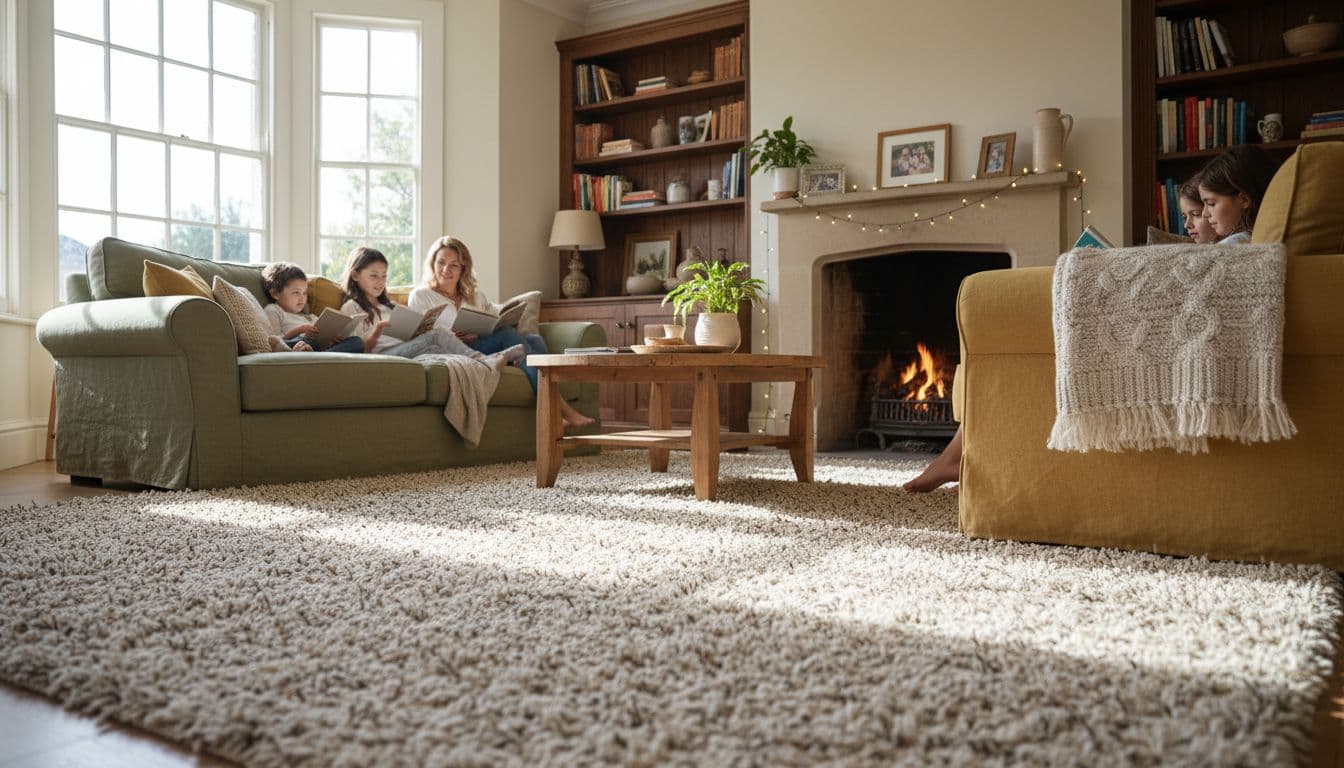 Cosy living room carpeted in warm tones, showing the comfort and softness carpets can add, created with AI.
The “best” carpet changes from room to room. Three things usually decide it: foot traffic, moisture and mess, and how easy it is to clean. In many UK homes that means muddy shoes in the hallway, constant up-and-down on stairs, and bedrooms where warmth matters more than toughness.
A simple way to think about it is this: comfort sits on one side, durability on the other. You don’t have to pick just one, but you do need to know which matters most in each space.
Quick room-matching tips that save regret later:
- Busy routes (hallways, stairs) suit tighter piles and stronger fibres.
- Bedrooms suit softer piles and warmer underlay.
- If you’ve got kids or pets, pick colours and textures that forgive everyday life.
Living room and bedrooms: comfort, warmth, and feel underfoot
Living rooms and bedrooms are where carpets earn their keep. You notice the softness when you step out of bed, and you feel the warmth when the heating isn’t on full blast.
If comfort is top of the list, look at:
Twist pile: Soft enough for most living rooms, but still practical. A good twist carpet can handle regular footfall without looking tired too quickly.
Saxony pile: Often plusher and deeper, with a smooth, velvety look. It feels great, but it can show footprints and vacuum lines more than other styles.
To keep a soft carpet looking good, don’t just judge it by thickness. Check:
- Density: A dense carpet resists flattening better. If you can easily see backing when you part the fibres, it may crush sooner.
- Pile weight: Heavier pile often means more fibre per square metre, which can improve wear.
- Underlay quality: A decent underlay makes the carpet feel better and reduces wear by absorbing impact.
Colour and texture also do quiet work. Mid-tones, heathered mixes, or subtle patterns can hide small marks. Very pale shades look stunning on day one, but they can show the reality of tea spills and everyday dust.
Stairs, hallways, and landings: hard-wearing carpets that last
If carpets were shoes, stairs and hallways would be the daily commute. They take grit, twisting foot pressure, and the odd scrape from a hoover head or a school bag.
For high-traffic areas, look for:
Tighter piles: A firm twist pile often works well. It holds its shape and doesn’t flatten as easily as a deep, loose pile.
Durable fibres: Nylon and wool blends are common choices for bounce-back and long-term wear. Budget synthetics can work too, but choose carefully (more on that below).
Darker shades, flecks, and small-scale patterns can help hide scuffs and the “wear path” that forms down the centre of a hallway. Pattern choice matters on stairs as well. A simple fleck or subtle stripe can disguise day-to-day marks without making the space feel busy.
Safety is part of the decision. A well-fitted carpet improves grip on stairs. Loose edges, poor joins, or badly finished nosings can look scruffy and feel risky. Stairs are also where fitting quality shows fastest, so it’s worth treating them as a separate job, even if you’re carpeting the whole house.
Carpet types and materials explained (what to buy and why)
Carpet choices can feel like a wall of labels: twist, loop, wool, poly… The useful bit is how each option handles wear, stains, and comfort.
Here’s a quick, practical snapshot of common fibres:
FibreWhat it’s likeBest forWatch-outsWoolWarm, springy, long-lastingBedrooms, living rooms, mixed-use areasCosts more, needs careful cleaningPolypropylene (olefin)Budget-friendly, good with stainsRentals, spare rooms, kids’ roomsCan flatten faster, may feel less “bouncy”Nylon (polyamide)Tough, good bounce-backStairs, hallways, family homesCan cost more than basic syntheticsPolyesterSoft, good value, often feels plushBedrooms, lower-traffic living roomsCan crush in heavy traffic, can be harder with oily marks
Wool carpets: natural warmth and long life
Wool carpets have a feel that’s hard to copy. They’re naturally insulating, comfortable, and springy underfoot. In the right setting, a wool carpet can keep its look for years because the fibres bounce back better than many cheaper options.
Wool also works well with a good underlay, creating that cosy “quiet” feeling in bedrooms and lounges. It can help with noise too, which matters if you live in a terrace or have a busy household.
The trade-offs are straightforward. Wool usually costs more, and it benefits from sensible cleaning habits. If you over-wet it during stain removal, you can end up with lingering damp in the underlay, which is never pleasant. For many homes, a wool mix is the sweet spot: some of the comfort of wool, with extra durability and a lower price than pure wool.
Synthetic carpets: polypropylene, nylon, and polyester
Synthetic carpets can be excellent value, but they behave differently depending on the fibre.
Polypropylene is popular for good reason. It’s often the most budget-friendly option and it’s known for stain resistance with everyday spills. It can be a sensible choice for rentals, playrooms, and rooms where you want a clean look without worry. The downside is that it can flatten in busy spots, especially if the pile is tall and loose.
Nylon is often the workhorse fibre. It tends to resist crushing and springs back well, which is what you want on stairs and hallways. If you’ve got kids charging through the house or you wear shoes indoors, nylon can be a strong pick.
Polyester usually feels soft and can look plush for the money. It suits bedrooms and guest rooms where comfort matters and foot traffic is lighter. It can struggle in high-traffic zones, and some oily marks may need more care to lift.
Static can pop up with some synthetic carpets, especially in dry weather. A good underlay can reduce it, and so can keeping indoor air from getting too dry.
Pile and construction: twist, loop, berber, saxony, and cut-and-loop
Carpet construction affects how it looks on day one and how it wears in real life.
Twist pile (cut pile): Fibres are twisted and cut, giving a textured look that suits busy areas. It’s a common, practical option for UK homes.
Saxony (cut pile): Longer, more even fibres, often with a smoother look. It’s soft and cosy, but it can show shading and footprints.
Loop pile: Loops of yarn create a flatter, structured surface. It can be hard-wearing and good for traffic, but loops can snag. If you’ve got cats that like to scratch, or dogs with nails that catch, think carefully.
Berber: Often a loop pile style with a flecked look. It can hide marks well, and it works nicely in casual spaces.
Cut-and-loop: A mix of cut and loop fibres that creates pattern and texture. It can disguise wear and add interest without needing bold colours.
A short buyer checklist that helps in shops and online listings:
- Density: denser tends to wear better.
- Pile height: very tall piles feel plush, but can crush sooner.
- Backing: look for sturdy backing with neat construction.
- Pet factor: loop piles can snag, twists tend to cope better.
Costs, fitting, and how to get the best value in the UK
Carpet pricing can be confusing because the carpet itself is only part of the total. A “cheap” carpet can become pricey once you add underlay, fitting, and extras, and a mid-range carpet can look like a bargain if it lasts longer and stays comfortable.
When you compare quotes, compare like for like. Ask what’s included, and check measurements are done the same way.
What affects carpet prices (and which upgrades are worth it)
Several things push costs up or down:
Fibre type and quality: Wool and nylon often cost more than polypropylene, but they can last longer in busy areas.
Pile density and weight: Denser carpets often wear better. A bargain deep pile can look impressive but flatten quickly if it’s loosely packed.
Stain treatments: Some carpets include added protection. It can be useful in family homes, but it doesn’t replace quick clean-up.
Pattern matching: Stripes and large repeats can increase waste. That means you may need to buy more carpet than the room’s floor area suggests.
Room shape: Alcoves, bay windows, and awkward angles can create offcuts.
If you only upgrade one thing, make it the underlay. It improves comfort straight away, reduces noise, and helps the carpet cope with pressure. It can also reduce heat loss through the floor, which is a nice bonus in older properties.
Fitting options: DIY vs professional fitting
DIY fitting can work, but it’s not forgiving. Poor fitting shows up fast as ripples, fraying edges, and corners that won’t sit flat.
DIY might be realistic if:
- It’s a small, square bedroom.
- You’re confident with trimming and stretching.
- You’re replacing like-for-like, with straightforward doorways.
Professional fitting is usually the smarter choice for:
- Stairs (tight turns and neat edges matter).
- Awkward rooms (bays, multiple doorways).
- Any space where a poor finish will annoy you daily.
Also check for hidden costs in fitting quotes, such as uplift of old carpet, disposal, moving furniture, and trimming doors. It’s easier to budget when you know what’s included.
Measuring tips and avoiding common buying mistakes
Measuring sounds simple until you meet a bay window or a chimney breast. A few careful steps can save money and stress.
Basic measuring rules:
- Measure the widest points of the room in both directions.
- Add a small amount for trimming and fitting (your fitter or supplier can advise what they need).
- Note alcoves, doorways, and built-in cupboards.
- If you’re choosing a patterned carpet, plan for the pattern repeat so seams line up.
Common buying mistakes to dodge:
- Skipping underlay to “save” money.
- Choosing very light colours for a busy hall.
- Ignoring pets (loop piles and snagging are a classic headache).
- Forgetting stairs need a tougher spec than bedrooms.
- Ordering too tight on size, which can force awkward joins.
Carpet care: cleaning, stain removal, and making carpets last longer
Carpets don’t need fussy routines, but they do respond well to small habits. Think of it like brushing your teeth: short, regular care beats a big rescue job later.
Everyday maintenance: vacuuming, doormats, and furniture marks
Grit is the quiet enemy. It sits in the pile and acts like sandpaper when you walk over it.
A sensible routine for many homes looks like this:
- Hallways and stairs: vacuum several times a week if they’re heavily used.
- Living rooms: once or twice a week, more if you’ve got pets.
- Bedrooms: once a week often does the job.
Doormats help more than most people expect. One outside and one inside can cut down the mud and grit that causes wear at the front door.
For furniture marks and dents, try this: lift the pile gently with your fingers or a soft brush, and give it time to recover. Felt pads under chair and sofa legs reduce crushing and make moving furniture easier.
Spills and stains: simple steps that work for most carpets
Spills happen. The win is acting quickly and keeping it calm.
A simple method that suits many carpet types:
- Blot, don’t rub. Use kitchen roll or a clean cloth and press gently.
- Start with lukewarm water on a cloth, working from the outside in.
- If you use a cleaner, test it in a hidden spot first.
- Don’t soak the carpet. Too much water can reach the underlay and cause smells.
- Blot again, then let it dry fully (open a window if you can).
Common UK offenders include tea, coffee, mud, red wine, and pet accidents. With any of these, speed matters more than strong chemicals. For pet mess, remove solids carefully, blot well, then clean lightly and dry thoroughly. If smells linger, a professional clean can help, especially if the underlay has been affected.
When to replace a carpet (and how to keep it looking good until then)
Even well-chosen carpets don’t last forever. Replacement tends to make sense when:
- The pile is flattened and won’t lift, even after a deep clean.
- You’ve got worn patches on stairs or landings.
- Seams are showing or edges are fraying.
- Smells linger after proper cleaning and drying.
- Stains keep returning, which can mean the underlay is affected.
If you’re not ready to replace yet, you can buy time with a professional clean, trimming any snags (don’t pull them), and adding runners or rugs in high-traffic zones. How long carpets last varies a lot, but traffic and fibre choice usually matter more than anything else.
Conclusion
Choosing carpets gets easier when you follow a simple path: match the carpet to the room, pick a fibre that fits your lifestyle, and invest in underlay for comfort and longer wear. Factor in fitting early, especially for stairs and awkward spaces, because a good carpet can look poor if it’s badly installed. Before you buy, measure carefully and compare the total cost (carpet, underlay, extras, and fitting) so you don’t get caught by surprises. What room are you upgrading first?
Shop Carpets For Your Home

Shop for Furniture for your Home from Verified UK Retailers
Furniture for your Home Sofas Sofa Beds
Bedroom Furniture Beds & Mattresses
Shop for Furniture for your Garden, storage and Garden Rooms
Garden Furniture Garden Storage Gas BBQ’s Outdoor Kitchen Garden Decor Gardening Supplies
Garden Sheds Prefab Garden Rooms Garden Rooms with UK Installation
Pergolas Gazebo Greenhouse Canopies Awnings Conservatories
–
Explore More Expert Buyers Guides & Money Saving Tips
For a list of our main buyers guides use the drop-down menu at the top of the page. Topics related to this article are:
Home and Garden Furniture Buyers Guides
Bedroom Furniture Buyers Guides
living Room Furniture Buyers Guides
Garden Furniture Buyers Guides
–


Comments
Post a Comment