Mattress - Comfort, Support, Value Guide & Online Shop
A mattress can look fine in the shop, then feel completely wrong at 3 am. That’s when the little issues show up: a numb shoulder, a sweaty back, or that annoying bounce when your partner turns over.
Find a Mattress
The right choice helps you wake up looser, warmer or cooler (depending on what you need), and with more energy for the day. It also saves money, because replacing a “nearly right” mattress after a year hurts twice.
This guide keeps things simple. Start with your needs, match them to a mattress type, then check quality and sizing so you can compare prices with confidence.
Start with your sleep needs, not the sales talk
Most mattress regret comes from buying based on labels instead of real life. “Orthopaedic”, “hotel”, “luxury”, none of that tells you how your body will feel after eight hours.
Begin with four basics:
1) Your body and weight: Heavier bodies often compress comfort layers more, so they may need firmer support layers to stop dipping. Lighter bodies can feel “perched” on very firm beds and may prefer more cushioning.
2) Your sleep position: This decides where you need pressure relief and where you need support. A mattress should keep your spine in a neutral line, not bent like a banana.
3) Any health needs: Back pain, sore hips, arthritis, reflux, and pregnancy can change what feels right. If you’re under medical care, follow clinical advice first, then use this guide to narrow choices.
4) Your bedroom set-up: A mattress doesn’t perform the same on every base. Slats that are too far apart can cause sagging; an old divan can hide dips that the mattress can’t fix.
Your sleep position and firmness, what actually works
 Different sleep positions need different levels of cushioning and support, created with AI.
Side sleepers usually do best with medium to medium-soft comfort. Your shoulder and hip need to sink in, while your waist stays supported. If the mattress is too firm, pressure builds fast and you wake with tingling arms.
Back sleepers often suit medium to firm. You want the pelvis supported so your lower back doesn’t arch, but you still need enough give to avoid a stiff upper back.
Front sleepers tend to need firm support, as the hips can sink and strain the lower back. Many front sleepers feel better moving to side sleeping over time, but if you’re staying on your front, avoid thick, soft top layers.
Combination sleepers (you shift position) usually prefer medium-firm with a responsive feel, so you can turn easily without feeling stuck.
A quick truth that saves time: firm doesn’t always mean supportive. A mattress can be rock hard yet still let your hips drop, because the support core is weak or the comfort layers pack down.
Key comfort issues to plan for (back pain, hot sleep, allergies, partner movement)
Think of your mattress like a pair of trainers. If one part is wrong, the rest doesn’t matter much.
- Back pain: Look for even support and good pressure relief. Zoned support can help (firmer under hips, gentler under shoulders), but it must match your body shape to feel natural.
- Hot sleeping: Prioritise airflow layers, breathable covers, and materials that don’t trap heat. Some foams feel cosy at first, then get clammy later.
- Allergies: A removable, washable cover and a quality protector matter more than marketing claims. Materials that resist dust mites and mould help, but cleaning habits are still key.
- Partner movement: Motion isolation reduces disturbance. Memory foam often excels here; pocket springs can be good too, depending on top layers.
- Getting in and out of bed: Strong edge support stops that “rolling off” feeling, and makes the usable sleep space larger.
Mattress types explained in plain English
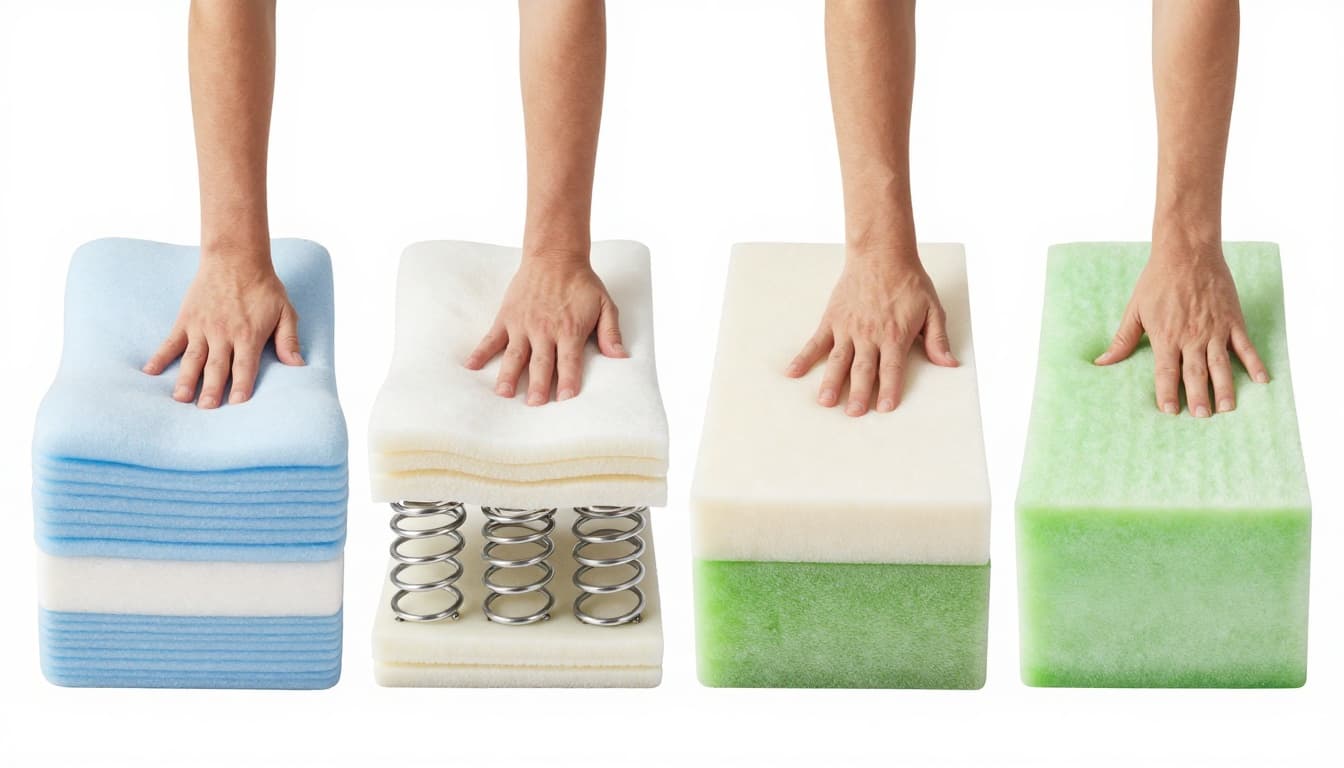 Common mattress types shown side-by-side so you can compare feel and build, created with AI.
Choosing a mattress type is like choosing a driving style. Some feel smooth and cushioned, others are springy and responsive. None is “best” for everyone.
Memory foam, great for pressure relief but watch heat and feel
Memory foam has that slow-moulding “hug”. It spreads your weight and can reduce pressure on hips and shoulders. It also tends to quiet partner movement, which is why couples often like it.
Trade-offs to watch:
- Heat: Some foams trap warmth. Cooling foams, gel layers, and breathable covers can help, but the feel still matters.
- Ease of turning: The slow response can feel like you’re climbing out of a dip.
- Body weight and firmness: Heavier bodies may sink more, so look for firmer support layers and a stable core.
Memory foam often suits: side sleepers, people with pressure-point pain, couples who hate bounce.
Pocket sprung, bouncy support with good airflow
Pocket sprung mattresses use many individual springs in fabric pockets. They compress more where you press, so support can feel more tailored than older open coil systems. They also allow good airflow through the spring unit, which many hot sleepers appreciate.
A common trap is obsessing over spring count. It matters, but so do:
- wire thickness (gauge),
- spring height,
- and the quality of comfort layers on top.
Pocket sprung often suits: back sleepers, hot sleepers, people who like a responsive, “lifted” feel.
Hybrid mattresses, a popular middle ground
Hybrids mix pocket springs with foam or latex layers. The aim is simple: pressure relief on top, supportive bounce underneath. For many people, it hits a sweet spot between “too sinky” and “too bouncy”.
Hybrids can be a strong choice for:
- couples with different preferences,
- combination sleepers who change position,
- shoppers who want comfort without feeling stuck.
They can cost more than basic foam or basic sprung models, but the feel is often more forgiving.
Latex and other options, cooler, springy, often longer lasting
Latex mattresses feel springy and buoyant, with less sink than memory foam. They can be a good pick for people who want pressure relief but still want to move easily. Many also find latex sleeps cooler, though covers and comfort layers still matter.
Latex comes in natural or synthetic blends. Durability is often a plus, but check the full build, not just the headline.
Other options you’ll see:
- Open coil: Usually cheaper, often bouncier, and support can be less consistent over time.
- Basic foam-only: Budget-friendly, but can lack airflow and may dip sooner if the foam is low quality.
How to choose a mattress that lasts and saves you money
A mattress is one of those purchases where “cheap” can become expensive. If it loses support, you pay again, either with your wallet or your back.
Quick quality checklist (materials, thickness, edge support, cover, trial and warranty)
Use this as a simple filter before you compare deals:
- Comfort layers: Do they feel supportive after a few minutes, not just soft?
- Build clues: Denser foams and well-made spring units tend to hold up better.
- Overall height: Very thin mattresses often struggle with long-term support, especially for adults.
- Edge support: Sit on the side. If it collapses badly, it may feel smaller in daily use.
- Cover: A breathable, well-fitted cover helps with temperature and comfort. Removable and washable is a bonus.
- Sleep trial and returns: Check how returns work, any collection fees, and how “trial” is defined.
- Warranty: Read what counts as a fault (many focus on deep dips only).
If the small print is hard to understand, treat that as a warning sign.
Choosing the right size for UK bedrooms and bed frames
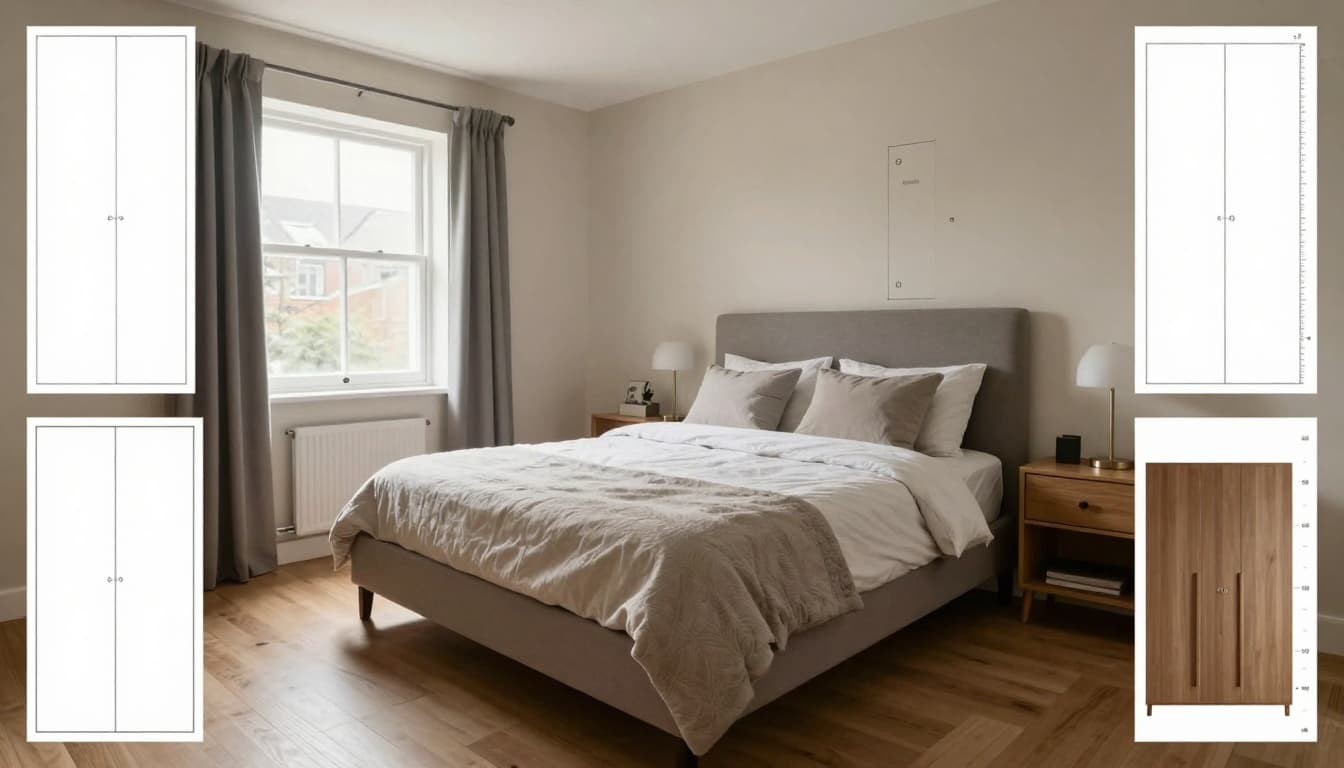 How different mattress sizes can change the feel of a typical UK bedroom, created with AI.
Common UK mattress sizes include single, small double, double, king, and super king. If you’re choosing between two, sizing up often improves sleep more than you expect, especially for couples.
Before you buy:
- Measure the room, then mark the bed footprint with tape.
- Check doorways, stairs, and tight turns.
- Make sure the mattress suits your base (slatted frame spacing, divan condition, or adjustable frame compatibility).
Also check depth. A very deep mattress can make some fitted sheets and bed frames awkward.
Care tips that protect your mattress (and your budget)
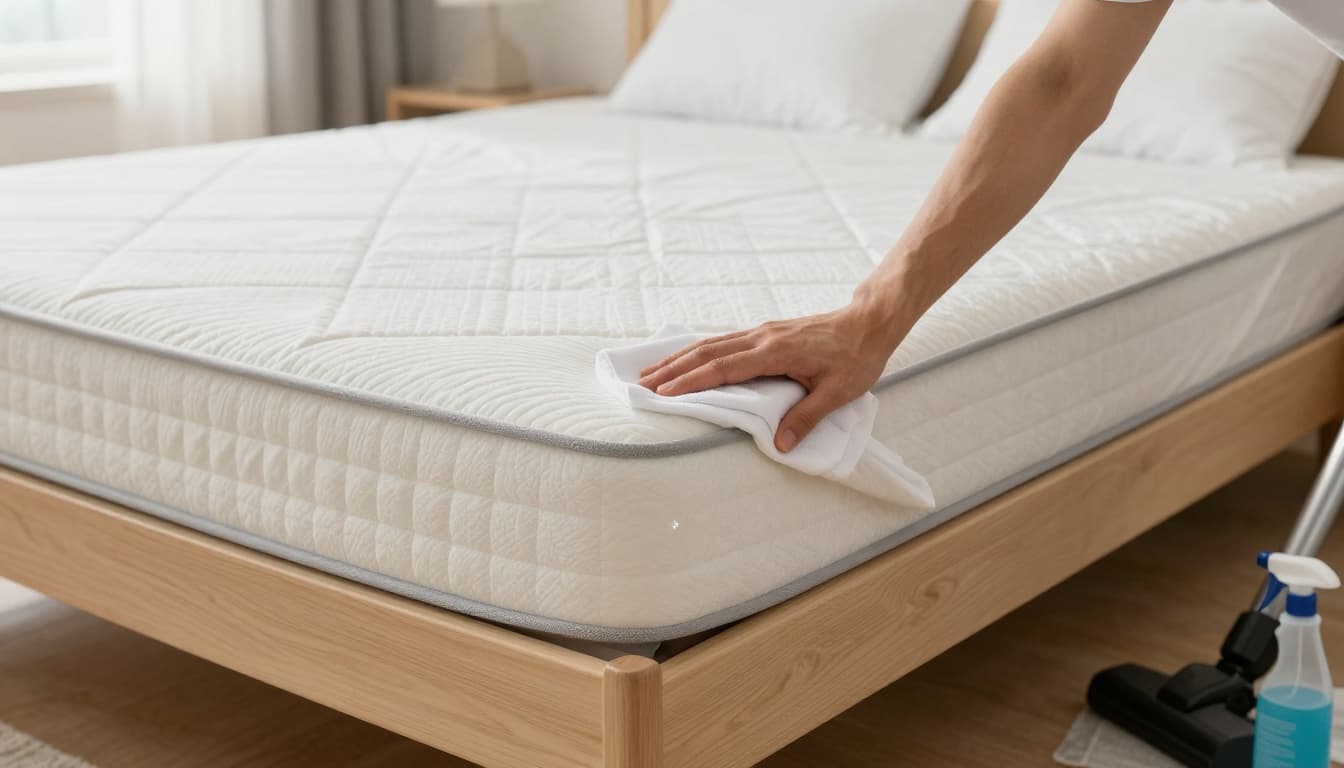 Simple mattress care like rotating and using a protector can help reduce dips and stains, created with AI.
A few habits can keep comfort consistent and slow down sagging:
Rotate when needed: Many mattresses are “no flip” but still benefit from rotation. Follow the maker’s guidance, often every few months at the start.
Use a breathable protector: It guards against sweat and spills without turning the bed into a plastic bag. Breathable matters for heat.
Let it air: Strip the bed for a short time now and then, especially after illness or heavy sweating.
Clean spills quickly: Blot, don’t soak, and keep moisture out of the core.
Reduce dips: Use a supportive base, avoid sitting on the same edge every day, and don’t let slats bow or spread too far apart.
Conclusion
Buying a mattress gets easier when you follow a clear path: pin down your sleep needs, choose a mattress type that fits your preferences, then check quality basics before you compare prices. Size matters too, especially in UK bedrooms where a few extra centimetres can change comfort for couples.
If you remember one thing, make it this: comfort and support come first, discounts come second. Keep a simple checklist handy, and you’re far less likely to end up with another “fine in the shop, awful at home” mattress.
Shop Mattresses
Shop for Furniture for your Home from Verified UK Retailers
Furniture for your Home Sofas Sofa Beds
Bedroom Furniture Beds & Mattresses
Shop for Furniture for your Garden, storage and Garden Rooms
Garden Furniture Garden Storage Gas BBQ’s Outdoor Kitchen Garden Decor Gardening Supplies
Garden Sheds Prefab Garden Rooms Garden Rooms with UK Installation
Pergolas Gazebo Greenhouse Canopies Awnings Conservatories
–
Explore More Expert Buyers Guides & Money Saving Tips
For a list of our main buyers guides use the drop-down menu at the top of the page. Topics related to this article are:
Home and Garden Furniture Buyers Guides
Bedroom Furniture Buyers Guides
living Room Furniture Buyers Guides
Garden Furniture Buyers Guides
–


Comments
Post a Comment