Men’s Shirts: Types, Fit, Fabrics, and How to Wear Them. Shop Spring 2026
Buying men’s shirts should be easy, yet it’s one of the quickest ways to waste money. One shirt looks smart on the hanger, then balloons at the waist, pulls at the buttons, or turns see-through in daylight.
Find Men’s Shirts
This guide keeps it plain and UK-focused. You’ll learn the main shirt types (and when to wear each), how to get the fit right without fuss, what fabrics actually feel good in British weather, and a few outfit formulas that work for work, weekends, and events.
The aim is simple: help you look sharper, spend less over time, and dodge the common buying mistakes that make a shirt sit in the back of the wardrobe.
Men’s shirt types, and when to wear each
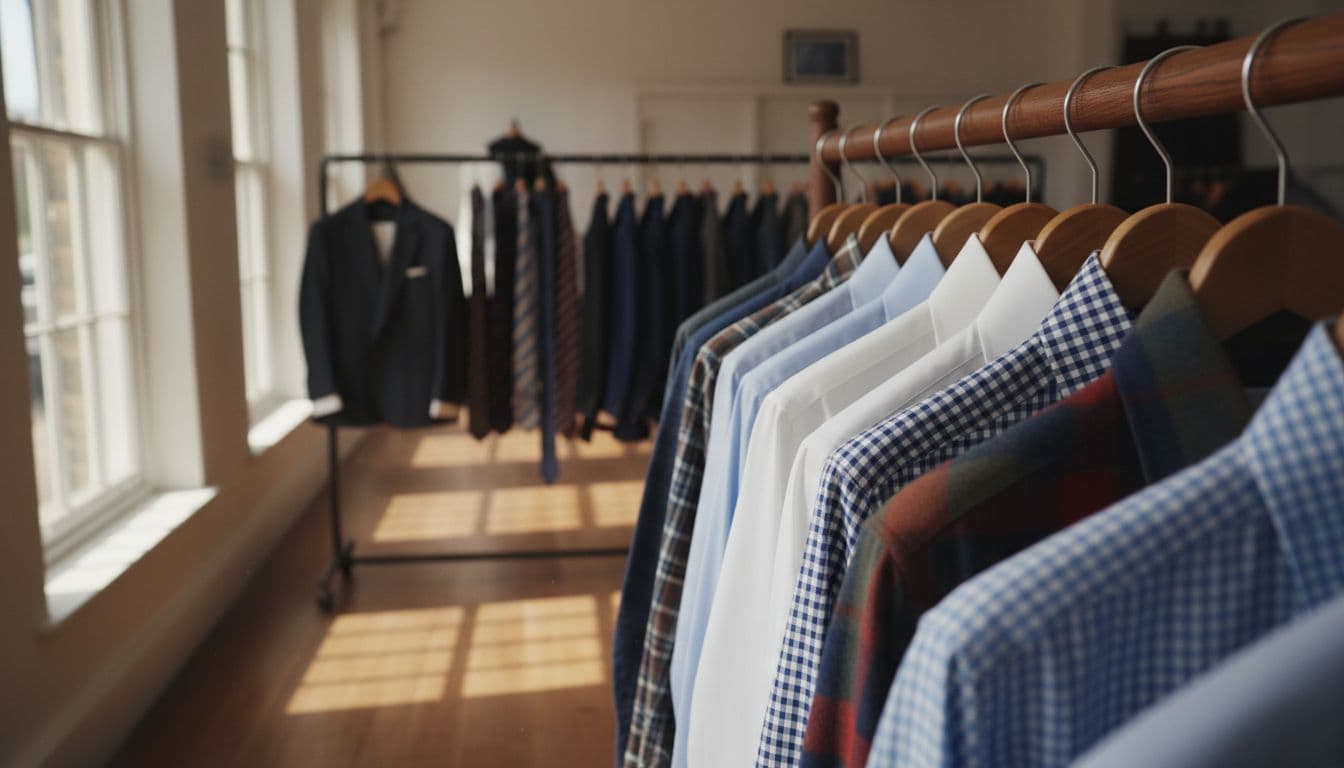 Different men’s shirt styles side by side, from formal dress shirts to Oxford and flannel, created with AI.
Most shirt confusion comes from trying to make one style do every job. Shirts have small details that change the whole vibe.
A few quick cues help you spot what you’re holding:
- Collar stiffness: Stiffer collars read smarter and hold their shape under a jacket.
- Hem shape: A curved, longer tail is made to tuck in, a straighter hem looks better worn out.
- Cuff style: Double cuffs shout “event”, barrel cuffs suit daily wear.
- Fabric weight and texture: Smooth fabrics feel formal, textured weaves feel more relaxed.
In the UK, you’ll usually rotate between dress shirts for suits and weddings, and Oxford or other smart casual shirts for the office, dinner, and the pub.
Formal dress shirts for suits, interviews, and weddings
A formal dress shirt is the clean, sharp option, worn tucked-in with tailored trousers. It’s the one you reach for when the stakes are higher: job interviews, client meetings, graduations, weddings, and any “proper” evening event.
Colours that always work: white and light blue. They sit well under navy, charcoal, and mid-grey suits. If you want variation without looking loud, try a subtle texture (like a fine twill) rather than a bold pattern.
Plain vs texture: plain poplin looks crisp and smooth, while a faint texture adds depth and hides tiny creases. For photos, texture can look richer than flat white.
Single cuffs vs double cuffs:
Single cuffs (barrel cuffs) are normal day-to-day. Double cuffs (French cuffs) are for weddings, black tie-adjacent events, and when you’re wearing a smarter suit. You’ll need cufflinks, even basic ones.
Collars made easy:
- Spread collar: a great all-rounder, especially with a tie. It suits most faces and looks modern without trying too hard.
- Point collar: slightly more traditional, good if you want a clean, classic line.
If you wear ties often, don’t go tiny and skinny by default. A tie should suit your lapels and build. Medium widths are usually safest.
One detail that matters more than people think is the length. A dress shirt should have a longer tail so it stays tucked. If it pops out every time you reach for a top shelf, it’s not doing its job.
Oxford and smart casual shirts for everyday polish
An Oxford shirt is the quiet workhorse. It looks smart enough for the office, but relaxed enough for a weekend lunch. If you want one shirt that earns its keep, this is the category to focus on.
What makes Oxford cloth different?
Oxford is a sturdier weave, often slightly textured, with a bit more body than a smooth dress shirt. It drapes nicely, feels hard-wearing, and tends to look better slightly lived-in. That’s why it sits right in the middle between formal and casual.
How to wear it:
- With chinos and loafers for smart casual.
- With dark jeans and a clean trainer for a pub night.
- Under knitwear (crew neck or half-zip) without the collar collapsing.
- With a casual blazer when you want to look “put together” but not stiff.
Many Oxford shirts come with a button-down collar. Those little buttons aren’t just decoration. They stop the collar tips flapping about, which is why button-downs look relaxed and sporty. They’re great without a tie. If you do wear a tie, keep it simple and don’t force it.
For a cleaner untucked look, check the hem. Oxfords often have a slightly shorter, less dramatic tail than formal shirts, so they can work both tucked and untucked (depending on your height and torso length).
How to choose the right fit, collar, and sleeve length
If you get one thing right, make it the fit. Fabric and colour matter, but a poor fit will always look off, even in a pricey shirt.
A simple order helps: fit first, then collar, then sleeves. If you shop online, this approach stops you obsessing over small details while missing the big issue.
Fit guide: slim, regular, and relaxed (plus easy fit checks)
Fit names vary, but most men’s shirts land in three buckets:
Slim fit: closer through the chest and waist, with higher armholes. It can look sharp, but it’s unforgiving. If the fabric pulls at the buttons when you sit, it’s too tight.
Regular fit: the safest choice for most builds. It should skim the body, not cling. You want movement without excess fabric billowing.
Relaxed fit: more room through the body and sleeves. Great if you prefer comfort, layer often, or have broader shoulders and arms. The key is shoulder fit, even if the body is roomy.
Five quick checks you can do at home (no tape measure needed):
- Shoulder seams: the seam should sit right at the edge of your shoulder bone. If it drops down your arm, the shirt’s too big. If it sits on top of the shoulder, it’s too small.
- Buttons at the chest: stand normally, then take a deep breath. If the buttons gape or pull, size up or change fit.
- Collar space: do the “two-finger” check. You should fit two fingers between collar and neck when buttoned. One finger is often too tight for a full day.
- Sleeve length: sleeves should reach your wrist bone with your arms down. When you bend your arm, it shouldn’t shoot halfway up your forearm.
- Tuck test: tuck it in, then raise your arms like you’re reaching for a shelf. If the hem comes out, the shirt is too short for regular tucked wear.
A small tip that saves hassle: if your shoulders fit well but the waist is loose, it’s usually easier to take in the body than to fix shoulders that are too tight.
Collars and cuffs made easy: what looks best on you
Collar choice doesn’t need a rulebook, but a few simple pointers help.
Match collar shape to your face (lightly, not religiously):
- Rounder faces often suit collars with a bit more length (like a point collar) as it adds a longer line.
- Longer faces can look good with a wider spread, which balances things out.
Match collar to how you dress:
- Spread collar: best all-rounder for suits and ties.
- Point collar: classic, tidy, and slightly more formal.
- Button-down collar: casual, great with knitwear and without a tie.
Cuffs are even simpler:
- Barrel cuffs (button cuffs) suit most days and most outfits.
- Double cuffs are for smarter events. Add cufflinks, keep the rest clean, and you’ll look like you planned the outfit rather than threw it on.
Fabric, quality, and care: what to look for before you buy
The fabric affects comfort, how the shirt hangs, how much it creases, and how it feels at 8am on the commute and again at 8pm in a warm pub.
In the UK, you also need a shirt that copes with changeable weather. A shirt that’s perfect in July can feel thin and flimsy by October.
Best shirt fabrics for comfort and UK weather
Cotton poplin: smooth, crisp, and common for dress shirts. It looks sharp under a suit, but it can crease. Great for offices and events.
Cotton twill: slightly thicker with a diagonal weave. It’s softer, drapes well, and often creases less than poplin. A solid choice for autumn and winter, or for anyone who hates a paper-crisp feel.
Oxford cloth: textured and sturdy. It’s your smart casual staple, and it works across most of the year. It also handles repeat wear well, which makes it good value.
Linen: unbeatable on hot days, especially for summer trips and UK heatwaves. It creases, that’s part of the look. If you want linen to feel intentional, keep the rest of the outfit tidy (clean shoes, neat belt, good fit).
Cotton blends: often pitched as easy-care. Many do crease less and dry faster. The feel varies, so check that it’s breathable enough for you. Blends can be handy for travel or long days when you don’t want to iron.
Care matters as much as fibre. A shirt that survives frequent washing without twisting seams or losing shape is usually a better buy than a delicate one you avoid wearing.
Quality checklist: stitching, buttons, pattern matching, and see-through risk
You don’t need to be a shirt expert to spot poor quality. Use a quick scan before you commit, especially when buying online and checking on arrival.
What good looks like:
- Neat seams with even stitching, no obvious wobbles.
- Buttons that feel secure, with tight stitching and no loose threads.
- A spare button attached inside (not a guarantee, but a good sign).
- A collar that lies flat and looks even on both sides.
- Minimal loose threads around cuff and hem.
- For stripes and checks, pattern alignment that looks tidy at the front placket and pockets.
Red flags:
- Puckering along the button line, which can happen when the fabric is under tension or poorly sewn.
- Buttons that rattle or feel like they’ll pop off.
- Collar points that curl up straight away.
- For white shirts, heavy see-through in daylight. Hold it up to a window. If you can clearly see your hand through it, plan for an undershirt or choose a thicker fabric.
On the subject of undershirts, a close-fitting crew neck in a shade near your skin tone often disappears best under white. Bright white undershirts can show through more than you’d expect.
How to style men’s shirts: outfits that always work
A good shirt is like a good mate. It makes the rest of your wardrobe easier. The trick is to keep the outfit simple, then get one or two details right (fit, colour balance, and shoes).
Work and events: simple combinations that look sharp fast
These outfit formulas cover most UK workplaces and events where you want to look smart without fuss:
White dress shirt + navy suit + dark brown shoes
Crisp, reliable, and ideal for interviews and weddings. Keep the belt the same tone as your shoes.
Light blue shirt + charcoal trousers + navy blazer
A strong option when you don’t want a full suit. The light blue softens the look while still reading professional.
Fine stripe shirt + plain tie + mid-grey suit
If the shirt has pattern, keep the tie simple. This stops your outfit looking busy, especially in photos.
White shirt + black or charcoal suit + black shoes
Best for evening events and formal settings. Keep the shirt smooth and well-pressed.
A few small details that help:
- Tie width: aim for a width that doesn’t look tiny against your lapels.
- Socks: match socks to trousers for a longer leg line, or go a shade darker for a safe contrast.
- Tuck and tidy: if you’re wearing a jacket, a tucked shirt nearly always looks cleaner. Smooth the placket, check the collar points, then you’re done.
Weekend and nights out: relaxed looks without looking scruffy
Casual shirt outfits work best when one element stays clean and structured. If the shirt is relaxed, keep the trousers dark and the shoes neat. If the shirt is sharp, you can go more casual elsewhere.
Try these:
- Oxford shirt worn untucked + dark jeans + clean trainers: a solid pub-to-dinner look. Choose a shirt hem that doesn’t hang too long.
- Overshirt worn open + plain T-shirt + straight-leg jeans: good for evenings when you want layers without a heavy coat.
- Linen shirt + chinos + loafers or simple trainers: ideal for warm days. Accept the creases and keep the rest polished.
- Flannel shirt + dark denim + boots: great in cooler months. Pick a flannel that feels soft but not bulky.
If you roll sleeves, do it neatly. Roll to just below the elbow, keep both sides even, and avoid a tight band that cuts into your arm. A relaxed roll looks better than a perfect one.
Collars matter on casual looks too. If the collar’s crushed, the whole outfit can look tired. Hang shirts properly, button the top button on the hanger, and the collar keeps its shape.
Conclusion
Men’s shirts get easier when you keep it simple. Choose the right type for the job, get the fit right at the shoulders and collar, pick a fabric that suits your week and the UK weather, then lean on a few outfit formulas you can repeat.
The next step is practical: check your wardrobe gaps for work, casual, and summer, then buy one versatile shirt first (a light blue Oxford or a crisp white dress shirt). From there, building a small rotation of men’s shirts feels far less like guesswork, and a lot more like having your mornings sorted.
Shop Men’s Shirts
Explore More Women’s Clothes, Fashion and Accessories
Womens Clothes Dresses Vintage Style Lingerie Swimwear Shoes Trainers
Maternity Clothes Baby Clothes
Jewellery Perfume Make Up Handbags Accessories
Discover Men’s Clothes, Fashion and Accessories
Men’s Clothing Men’s Outdoor Footwear Sneakers Mens Underwear Men’s Swimwear
Men’s Watches Men’s Jewellery Bags Accessories Aftershave
–
Explore our Buyers Guides & Money Saving Tips
For a list of our main buyers guides use the drop-down menu at the top of the page. Topics related to this article are:
–


Comments
Post a Comment