Miele Washing Machine: For UK Homes (Features, Fit, and Everyday Use)
Shopping for a Miele washing machine usually means you want one thing above all: less hassle. You want washes that come out clean, a machine that feels solid when you shut the door, and cycles that don’t sound like a cement mixer in a spin.
Find Miele Washing Machines
Miele sits firmly in the premium end of the market, so the details matter. This guide explains the popular features people talk about (like Honeycomb drum care, TwinDos auto-dosing, quick wash options, steam-style anti-crease, AddLoad, and water protection). It also helps you choose the right setup for a typical UK kitchen or utility room, without guessing.
Why Miele washing machines are popular in UK homes
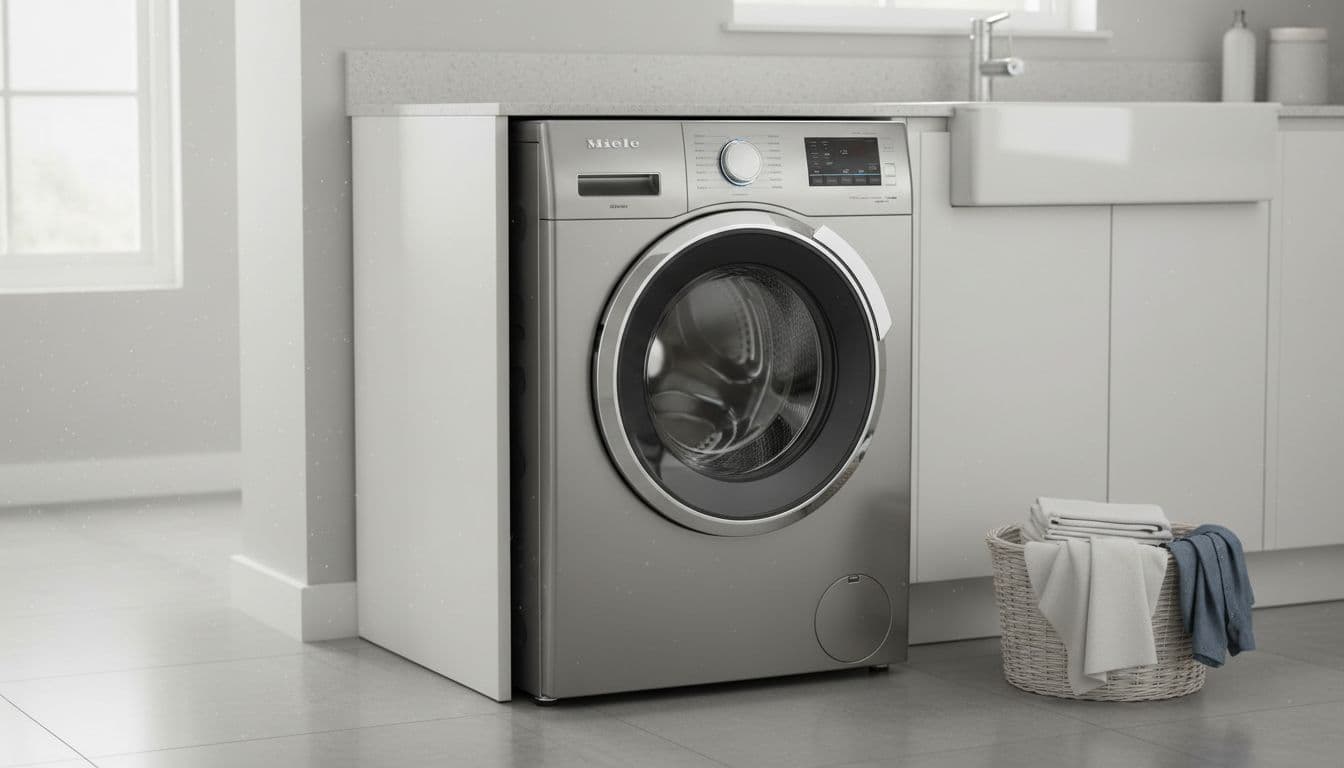 An example of a premium washing machine setup in a bright utility room, created with AI.
People don’t buy a premium washer because they love doing laundry. They buy it because laundry is relentless, and a better machine can make it quieter, simpler, and kinder to clothes.
Miele washing machines are often picked for their reputation for steady performance, sensible programmes, and a feel of quality you notice every time you load it. In many UK homes, the washer sits close to living space, so noise and vibration matter as much as stain removal.
Built to last and feel solid
“Premium build” isn’t just a label. You feel it in the sturdy door, the smooth dial or buttons, and how stable the machine stays during a fast spin.
A solid build can also mean less wobble. Less wobble usually means less wear over time, fewer irritating rattles, and less movement across a tiled floor. That said, even the best machine still needs basic care (correct loading, cleaning, and the odd maintenance wash) to stay in top shape.
Quiet washing for open-plan living and night-time cycles
If your washing machine is in the kitchen, an open-plan flat, or near a bedroom wall, noise can become a daily stress. Quieter washing tends to come from a mix of:
- Better balance control during the spin
- Smoother motor control (so the drum doesn’t surge)
- Added insulation and vibration reduction inside the cabinet
- A stable chassis that doesn’t flex and drum
This matters most when you run loads early, late, or while working from home. Before you buy, check the noise rating on the energy label, especially for spin noise, since that’s when most machines get loud.
Most-loved Miele washing machine features, and what they actually do
A feature list can look impressive, but day to day it’s simple: less effort, better fabric care, and fewer annoying laundry mistakes. Here are the options UK shoppers tend to like, explained in plain terms.
Gentle fabric care, Honeycomb drum and smart wash action
Miele’s Honeycomb drum is designed to treat clothes gently. The idea is to let laundry glide with less rubbing, so fabrics get less stressed in the wash.
In real life, gentle wash action helps with items you don’t want to ruin:
- School uniforms that get washed constantly
- Knitwear that can snag or lose shape
- Gym kit and sportswear that can pill and stretch
- Delicate tops that catch on rough drum surfaces
It won’t make clothes last forever, but it can reduce the small damage that builds up across hundreds of washes. Think of it like choosing a soft brush instead of a stiff one, the result is still clean, but less harsh.
Automatic detergent dosing (TwinDos), less guesswork and fewer suds problems
Auto-dosing (often called TwinDos) is popular because most people over-pour detergent. Too much detergent can cause its own mess: residue on dark clothes, detergent smells that linger, and build-up that traps odours in the machine.
With automatic dosing, the washer measures detergent for the load. You still choose the right programme and load size, but you don’t stand there wondering if you poured “about right”.
A few practical truths to keep expectations realistic:
- You still need the right detergent type for the load (colour, whites, sensitive skin, and so on).
- If you always wash cool and use lots of detergent, residue can still build up.
- Run a cleaning or maintenance cycle now and then, and keep the dispenser area clean.
For busy households, it’s like having a reliable measuring spoon that never goes missing.
Quick and everyday programmes that still clean well
Most homes need two kinds of wash: the “everyday” load (worn once, light marks) and the “disaster” load (muddy football kit, towels, bedding). Quick wash programmes are mainly for the first group.
A quick wash is a great fit when laundry is lightly soiled and you want it back on the airer fast. It’s also handy when you’ve forgotten a key item, like a work shirt.
Quick cycles are not magic. Avoid them when:
- Clothes are heavily stained or muddy
- You’re washing thick towels or bulky hoodies
- The drum is crammed full (water and detergent can’t move properly)
Alongside quick wash options, people often use everyday programmes like mixed load, shirts, darks, and sportswear. The best habit is matching the programme to the fabric, not just the time you’ve got.
Steam or anti-crease options for fewer wrinkles
Steam or smoothing options aim to cut down creases and freshen clothes. For many UK homes, the big win is less ironing time on items that wrinkle easily, especially:
- Work shirts
- School shirts and blouses
- Cotton dresses and tops that crease on the line
Keep it realistic: anti-crease can reduce wrinkles, but it won’t replace ironing for every fabric and finish. You’ll get the best results when you also do the basics, like not overloading the drum and taking clothes out soon after the cycle ends.
Leak protection and safety features for peace of mind
Leaks are rare, but when they happen upstairs or in a flat, they’re a headache. Many shoppers look for protection features such as a water control system (or similar leak detection and shut-off), plus sturdy hoses and sensors that stop filling if something’s off.
Other safety and convenience features matter too:
- Child lock, so little hands don’t pause or change a cycle
- Door safety that prevents opening at unsafe times
- Overflow protection (useful if water pressure fluctuates)
If you live in a rented home, peace of mind matters. Good safety features don’t remove all risk, but they reduce it and can help you relax when the machine is running while you’re busy.
How to choose the right Miele washing machine for your household
A good choice comes down to fit, capacity, noise, and the features you’ll actually use. Start with how you live, not what looks good on a spec sheet.
Pick the right drum size and spin speed for your laundry pile
Capacity is measured in kg, but it’s easier to think in habits. If you wash little and often, you may not need a huge drum. If you do bedding, towels, school kit, and workwear in big batches, extra capacity makes life easier.
Spin speed also changes the feel of laundry day. Higher spins usually pull out more water, which can cut drying time on a rack or reduce tumble dryer use. The trade-off is that fast spins can be tougher on delicate fabrics.
Here’s a simple guide you can use:
Household and habitsPractical capacity aimSpin speed tipSingle person or couple, light use7 to 8 kgMid to high spin is handy for quick dryingCouple or small family, regular loads8 to 9 kgHigh spin helps with jeans and cottonsFamily, heavy daily use, lots of towels and bedding9 kg and upHigh spin is useful, but use gentler spins for delicates
If you’re often stuffing the drum, go bigger. Overloading is a common reason for poor cleaning and extra creasing.
Check fit, plumbing, and noise before you buy
UK homes can be tight for space, especially under-counter installs. Measure carefully, and consider the real-world stuff that trips people up:
- Depth with hoses, not just the cabinet depth
- Door swing space, especially if it sits next to a cupboard or wall
- Delivery access (hallways, door frames, tight turns)
- Where the water and waste hoses will sit without kinking
- Room for airflow, since a cramped gap can trap damp
If the washer is in a kitchen, think about when you run it and where you sit. If you’re noise sensitive, prioritise a lower spin noise rating and strong vibration control.
Which features are worth it, and which you can skip
Some features are genuinely useful. Others are nice, but not essential. This quick guide helps you spend money where it counts.
FeatureWorth it if…Easy to skip if…TwinDos auto-dosingYou want less measuring, fewer suds issues, and quick startsYou’re happy dosing carefully and cleaning the drawer oftenSteam or anti-creaseYou iron a lot of shirts or hate wrinkled cottonYou mostly wear easy-care fabrics or don’t mind ironingExtra quiet modesThe washer is near bedrooms or open-plan livingIt’s in a separate utility room and noise doesn’t bother youAddLoad (add items mid-cycle)You often forget socks, uniforms, or tea towelsYou’re disciplined about checking pockets and sorting firstExtra programmesYou wash mixed fabrics, sportswear, and delicates weeklyYou mainly run cotton and mixed loads
A good rule: pay for features that save time every week. Be cautious about paying for features you’ll use once a month.
Keeping your Miele washing machine running smoothly
A premium washing machine still deals with lint, detergent, damp air, and the odd forgotten tissue. A few small habits make a big difference to smells and performance.
Stop odours and detergent build-up with a simple routine
If your washer ever smells musty, it’s usually damp plus residue. You can prevent that with a routine that takes minutes:
- Leave the door and detergent drawer slightly open after a wash so it can dry out.
- Wipe the door seal now and then, especially after washing fluffy items.
- Use the right dose (auto-dosing helps, but don’t ignore it if the load is tiny).
- Run a hot maintenance wash occasionally, especially if you mostly wash at low temperatures.
- Rinse and clean the detergent drawer, since old detergent can turn sticky.
Low-temperature washes are great for saving energy, but if you never do a hotter cycle, residue can build up. A regular hot wash helps keep things fresher.
Common issues, and quick checks before you call an engineer
Most problems have a simple cause. A quick check can save you time and stress.
Not draining: Check the filter area (if accessible) and the drain hose for kinks. Empty pockets can stop small items getting stuck.
Excess suds: This is often too much detergent, or the wrong type for the load. Cut back, run a rinse, and avoid doubling up with extra detergent “just in case”.
Banging or thumping: Usually an unbalanced load (one heavy item, like a bath mat). Re-distribute the load, add a few smaller items, and try again.
Poor cleaning: Common causes are overloading, using a fast cycle for heavy dirt, or washing at too low a temperature for the job.
Safety first: unplug before checking any accessible filter area, follow the manual, and don’t open panels or force parts.
Conclusion
A Miele washing machine appeals to people who want calm, reliable laundry days: gentle fabric care, quieter running, smart features like auto-dosing, and safety options that reduce worry. The best choice is the one that fits your space, matches your laundry volume, and makes your weekly routine easier.
Write down your must-have features, measure your space, then compare energy label details and programme options across machines. Get those basics right, and your next wash day should feel a lot less like a chore.
Shop Miele Washing Machines
-
Shop Electronics and Tech from Trusted UK Retailers
TV’s Mobile Phones Laptops Smart Watches
Looking to protect your purchase? Explore appliance and gadget insurance options here.
Home Appliances Insurance– Gadget Insurance – Phone Insurance
–
Explore More Buyers Guides & Money Saving Tip
For a list of our main buyers guides use the drop-down menu at the top of the page. Topics related to this article are:
Kitchen Appliances Buyers Guides
–
Explore Our Blog Categories for Expert Buying Advice
https://comparepriceswebsite.co.uk/index.php/2025/12/24/miele-washing-machine/


Comments
Post a Comment