Pergola: How to Choose Designs and Care Guide, Shop Spring 2026
Thinking about a pergola? Here’s your 2025 guide to types (wood, aluminium, steel), louvred roofs vs canopies, sizing, planning permission, installation, styling, and maintenance, plus ideas for UK gardens, patios, and decks.
Explore Pergolas
Introduction
A pergola instantly elevates outdoor living by turning a plain patio into an outdoor room, somewhere to dine, lounge, or work from home in the fresh air. From classic timber frames draped in wisteria to sleek aluminium models with a motorised louvered roof, there’s a pergola for every UK garden and budget. This guide covers the essentials: which type to buy, how big to go, what roof to pick, installation tips, planning considerations, and smart styling ideas to make the space feel finished.
Why add a pergola?
- Creates shade and shelter for year-round use
- Adds structure and height for climbing plants
- Defines zones (alfresco dining, lounge, hot tub, outdoor kitchen)
- Boosts kerb appeal and property value as a striking garden feature
- Can reduce indoor heat gain by shading adjacent glazing
Pergola types (and when to choose them)
- Wooden frame pergola
- Best for: Natural, plant-covered look; budget-friendly DIY; partial shade.
- Pros: Warm aesthetic, easy to customise/paint/stain, ideal for climbers on lattice.
- Cons: Rain comes through; needs periodic treatment.
- Fabric-canopy pergola (retractable roof)
- Best for: Flexible shade on sunny patios and decks.
- Pros: Slide the canopy to control light; replaceable fabric.
- Cons: Not rainproof unless using waterproof fabric; wind management needed.
- Polycarbonate roof pergola
- Best for: Permanent rain cover with filtered light.
- Pros: Lightweight, UV-blocking, bright; good value.
- Cons: Can drum in heavy rain; needs decent fall and guttering.
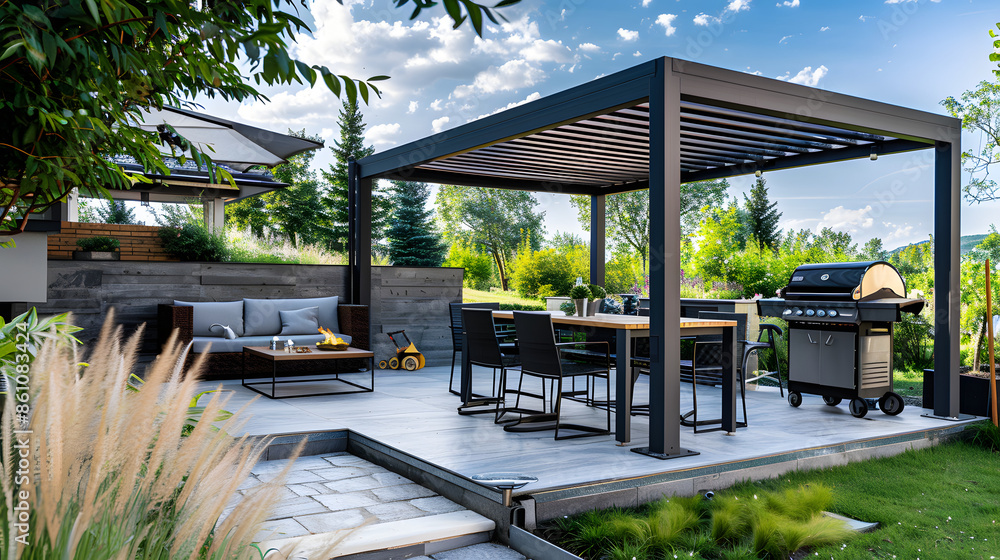
- Aluminium louvred pergola (manual or motorised)
- Best for: Premium, all-weather use; sleek modern look.
- Pros: Adjustable blades for sun/rain; integrated gutters; low maintenance.
- Cons: Highest upfront cost; needs a level, strong base.
- Steel-framed pergola (powder-coated)
- Best for: Slim profiles, high durability.
- Pros: Strong and stable; contemporary lines.
- Cons: Watch for corrosion if coating chips, especially near the coast.
Materials: pros and cons
- Pressure-treated softwood
- Pros: Affordable, easy to work with, classic look.
- Cons: Needs re-treating every 1 to 3 years; may twist if not dried or graded.
- Hardwood (oak, iroko)
- Pros: Stunning, durable, ages beautifully.
- Cons: Expensive; heavier to install; may silver over time.
- Aluminium
- Pros: Rust-proof, minimal upkeep, crisp modern aesthetic; ideal for louvres.
- Cons: Premium price; colour set by powder coat.
- Steel (powder-coated)
- Pros: Very strong steel-framed construction, slim sections; good for custom spans.
- Cons: Unlike aluminium, requires quality coating; touch up chips to prevent rust.
- Composite kits
- Pros: Low maintenance, weather-resistant wood look.
- Cons: Limited structural options and finishes.
Sizing & placement (get the proportions right)
- Free-standing structures offer common footprints such as 3×3 m for bistro or lounging areas on patios; 3×4 m for dining sets; 4×6 m+ for outdoor kitchens/hot tubs.
- Head height: 2.2 to 2.5 m clear height feels airy; allow extra for roof build-up.
- Clearance: Keep 1 m from boundaries for maintenance; avoid blocking neighbour light.
- Orientation: West/south-west for evening shade; consider prevailing wind and views.
- Over doors/windows: Wall-mounted options reduce summer heat gain; keep gutters aligned and allow door clearance.
Planning permission (UK quick guide—verify locally)
- Most freestanding pergolas in domestic gardens within sensible size/height fall under permitted development.
- Typical limits: Under 2.5 m high if within 2 m of a boundary; up to 3 m elsewhere, but check local rules.
- Conservation areas/listed buildings: Seek advice before installing.
- Drainage: Vented/louvred pergolas with gutters may require a drainage system for downpipes on boundaries; plan soakaways where needed.
Foundations & installation
- Base: Level, solid patio or deck with adequate joist/support spacing. For heavy units, a concrete slab or isolated pads are best.
- Footings: For timber, set vertical posts in concrete or use bolt-down post bases on slabs/deck beams (prevents rot).
- Fixings: Use stainless or hot-dip galvanised exterior fixings; structural screws for crossbeams.
- Anchoring: Essential for wind; follow kit specs for bolt size and pattern.
- Water management: For solid roofs or louvres, include a drainage system with gutters, downpipes, and a drain route.
- Electrical planning: Conduit for LED lighting, heaters, sockets; install outdoor-rated fittings (IP44+).
Roof options: shade, rain, and wind
- Open slats: Dappled shade; perfect with climbers.
- Retractable roof fabric: Choose UV-resistant solution-dyed acrylic or PVC-coated polyester; add tie-backs for wind.
- Polycarbonate: Clear, bronze, or opal; include fall (approximately 5 to 10 mm per 1,000 mm) and guttering.
- Louvred roof: Manual or motorised; look for drip-edge blades and internal downpipes; wind sensors automatically open and close on premium models.
- Side screens: Zip screens, privacy blinds or outdoor curtains add wind and privacy; pick mesh grades for airflow.
Comfort add-ons (turn it into an outdoor living room)
- Heating: Infrared patio heaters (wall or beam-mounted) or portable fire pits (observe clearances).
- Lighting: Warm-white LED lighting strips in beams, festoon lights, or downlights; add dimmers for ambience.
- Power & media: IP-rated sockets for chargers, projectors, speakers.
- Flooring: Composite decking, porcelain paving, or outdoor rugs to zone and soften.
- Furniture: Weatherproof, maintenance-free aluminium, teak, or PE rattan; quick-dry cushions with solution-dyed covers.
Planting ideas (soften the structure)
- Climbing plants: Wisteria, a classic planting choice, jasmine, honeysuckle, climbing roses (sun); evergreen clematis or star jasmine for year-round cover. Support them with a trellis or an arbor.
- Pots & planters: Olive trees, grasses (Stipa, Miscanthus), hydrangeas; use matching planters to anchor corners.
- Green roof vibes: Train grape vines on open slats for summer shade and winter sun.
Style playbook (match your home)
- Modern minimal: Corner pergola in anthracite aluminium, porcelain slabs, linear planters, integrated LEDs.
- Rustic Mediterranean: Timber posts, gravel or terracotta pots, scented climbers, lanterns.
- Coastal Scandi: Light wood or white steel, pale decking, striped textiles, grasses.
- Cottage garden: Painted timber in sage/cream, roses and clematis, vintage lanterns, bistro set.
- Pavilion (grander, more enclosed look): Timber framing, draped fabrics, ambient lanterns, cushioned seating.
Maintenance (keep it looking great)
- Timber: Wash annually; re-treat stain, oil or paint every 1 to 3 years. Check for splits and refasten loose fixings.
- Aluminium/steel: Maintenance-free appeal, rinse salt or pollen; mild soapy wash; touch up any chips on steel.
- Fabric canopies: Brush off debris; sponge clean; store or retract in storms; replace every few seasons if faded.
- Louvres/gutters: Clear leaves; check drains; lubricate moving parts per manufacturer guidance.
Budget guide (UK)
- Pergola kits (DIY timber, 3x3 m open top): £350 - £1,000+
- Timber with retractable canopy (3x3 - 3x4 m): £700 - £2,000
- Steel or aluminium fixed-roof or polycarbonate (3x4 m): £1,200 - £3,000
- Aluminium louvred (manual or motorised, 3x3 - 3x4 m): £2,000 - £8,000+
- Bespoke structures or outdoor rooms: £8,000 - £25,000+
Safety & durability checks
- Structural spans: Confirm beam sizing for your span and snow or wind loads.
- Anchors: Use rated anchors for your substrate; no shortcuts on fixings.
- Clearances: Heaters need safe distances; check appliance manuals.
- Drainage: Prevent water discharge onto neighbour property; add soakaway if needed.
Sample layouts (use these as templates)
- 3×3 m alfresco dining zone: 6 to 8-seat table, pendant-style outdoor light, two corner planters, zip screen on windward side.
- 3×4 m patio lounge zone: Corner sofa, coffee table, outdoor rug, strip lights in beams, wall-mounted infrared heater.
- 4×6 m entertainer: Dining + lounge, prep counter, freestanding BBQ (safe clearance), feature planter behind seating.
FAQ’s
Pergola FAQs
Q: Do I need planning permission for a pergola?
A: Freestanding pergolas in the garden usually fall under permitted development if under typical height limits and not forward of the principal elevation. Always check local rules, conservation restrictions, and boundary distances, particularly in windy locations.
Q: Can a pergola be truly waterproof?
A: Louvred roofs (closed) and well-installed polycarbonate systems are rain-resistant with gutters. In storms, wind-driven rain can still enter from the sides; add side screens for better protection.
Q: Will a pergola damage my decking?
A: Not if properly installed. Use bolt-through fixings into joists or dedicated footings/pads beneath; avoid fixing only to deck boards.
Q: What’s best for a windy garden?
A: Aluminium/steel frames with solid anchoring, minimal fabric, and optional zip screens. Choose louvres with wind sensors and robust blade locks.
Q: How tall should my pergola be?
A: 2.2 to 2.5 m clear height is comfortable. Go higher for large spaces or tall doors, but watch planning limits near boundaries.
Conclusion
A pergola is one of the highest-impact upgrades you can make outdoors, providing practical shade, architectural interest, and a defined place to live outside. Decide your priorities (natural timber vs low-maintenance aluminium, open slats vs louvres), size it to your furniture and space, plan the base and drainage, then layer lighting, plants, and textiles for comfort. Done right, your pergola becomes a pavilion evoking the essence of outdoor living, the most loved “room” in your home, from the first spring brunch to the last autumn sundowner.
Shop Pergolas
Shop for Furniture for your Home from Verified UK Retailers
Furniture for your Home Sofas Sofa Beds
Bedroom Furniture Beds & Mattresses
Shop for Furniture for your Garden, storage and Garden Rooms
Garden Furniture Garden Storage Gas BBQ’s Outdoor Kitchen Garden Decor Gardening Supplies
Garden Sheds Prefab Garden Rooms Garden Rooms with UK Installation
Pergolas Gazebo Greenhouse Canopies Awnings Conservatories
-
Explore More Expert Buyers Guides & Money Saving Tips
For a list of our main buyers guides use the drop-down menu at the top of the page. Topics related to this article are:
Home and Garden Furniture Buyers Guides
Bedroom Furniture Buyers Guides
living Room Furniture Buyers Guides
Garden Furniture Buyers Guides
–
Explore Our Blog Categories for Expert Buying Advice
–
https://comparepriceswebsite.co.uk/index.php/2025/09/24/pergola/


Comments
Post a Comment