Range Cookers: A Online Shopping Guide for Real Kitchens Spring 2026
Planning a new kitchen or replacing a tired old cooker? A range cooker can completely change how your kitchen looks and how you cook every day.
Find Range Cookers
In simple terms, a range cooker is a wide, freestanding cooker that usually combines multiple ovens with a large hob on top. It gives you far more space and flexibility than a standard single oven and separate hob, which is why so many British homes choose one as the main feature of the kitchen.
This guide walks through what a range cooker is, the space you need, fuel types, key features, running costs, and how to pick the right model for your budget and lifestyle.
What Is a Range Cooker and Is It Right for Your Kitchen?
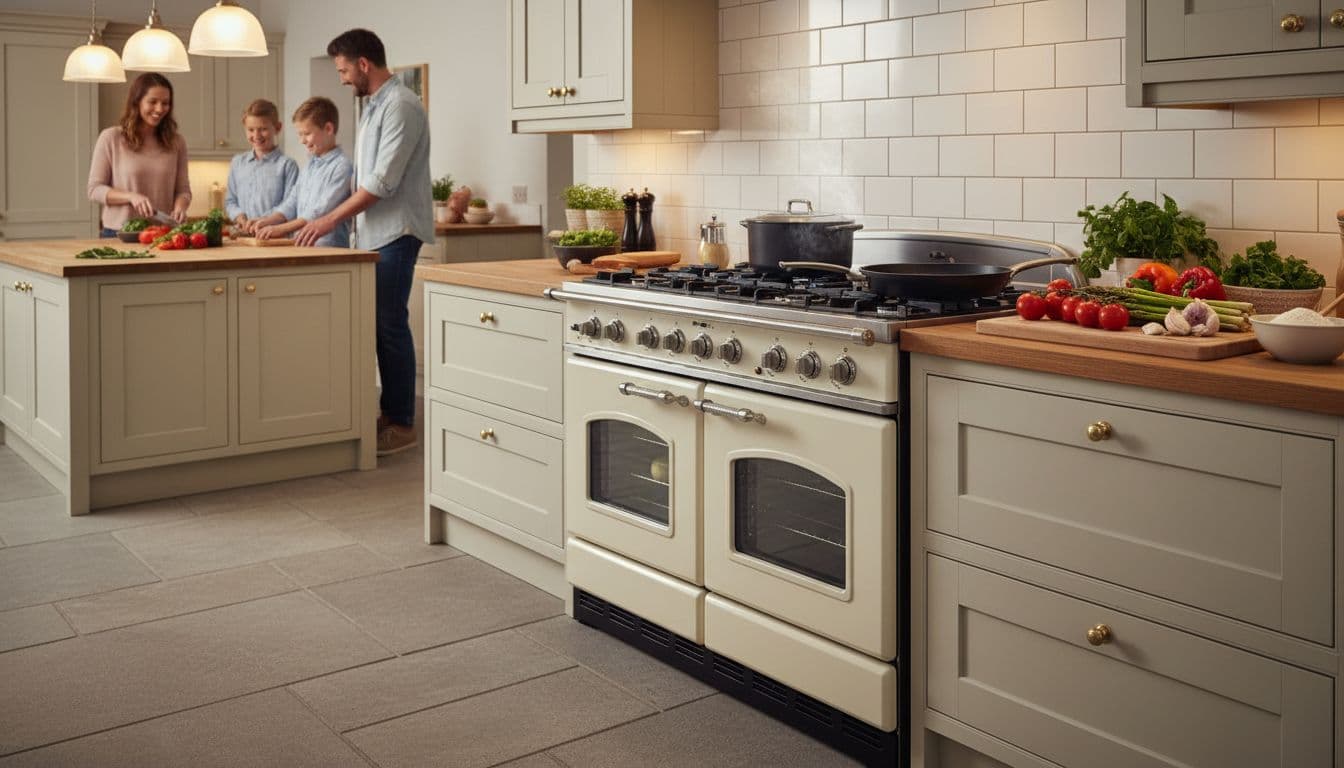 Dual fuel range cooker in a cosy modern British kitchen, with multiple ovens and a wide hob. Image created with AI.
A range cooker is a freestanding appliance that combines:
- A wide hob with several burners or zones
- One or more full-size ovens
- Often a separate grill and sometimes a warming drawer
Compared with a built-in oven and hob, a range cooker is usually wider, more powerful, and gives you more oven space in one unit. It is common in busy family homes, open-plan kitchens, and for anyone who loves batch cooking or hosting.
In the UK, typical widths are 90 cm, 100 cm, and 110 cm. Most British kitchens can take a 90 cm model if the layout is planned well, but wider sizes need more thought around units, worktops, and where doors and drawers open.
Key differences between range cookers and standard cookers
The main differences show up in day-to-day cooking:
- Width and size: A standard cooker is usually 60 cm wide. Range cookers start at 90 cm, so you get far more hob space and oven room.
- Oven capacity: Many ranges have two or three ovens. You can roast meat, bake a pudding, and warm plates at the same time.
- Burners or zones: Expect five or more gas burners or induction zones, often with a powerful central burner for woks.
- Build quality: Ranges tend to feel more solid, with heavier doors and sturdier supports for heavy trays.
- Price: They usually cost more upfront than a standard cooker, but can replace several separate appliances.
For a Sunday roast, you can cook meat in one oven, roast potatoes in another, and keep veg warm without juggling dishes. At Christmas, the extra space really helps. On a weeknight, you can just use one small oven to save energy.
Pros and cons of choosing a range cooker
Pros
- More cooking space for large meals and batch cooking
- Flexible ovens so you can cook different dishes at different temperatures
- Powerful hobs that cope with big pans and busy family cooking
- Stylish focal point, often turning the cooker wall into the heart of the kitchen
Cons
- Higher initial cost than a simple freestanding cooker
- More energy use if you heat several ovens often
- Takes more floor space, so not ideal for very compact kitchens
If you mostly cook for one or two people and rarely host, a standard cooker may be enough. If you love feeding a crowd, a range cooker can feel like a future-proof choice.
How much space do you need for a range cooker?
Most UK range cookers are:
- Width: 90 cm, 100 cm, or 110 cm
- Depth: around 60 to 65 cm
- Height: around 90 cm to match worktop level
You also need a small gap either side, space behind for gas and electric connections, and enough clearance above for a hood or extractor.
Before you shop, measure:
- Width of the gap where the cooker will sit
- Depth of worktops and any units opposite
- Height to any cupboards or extractor above
- Doorways, hallways, and tight corners on the delivery route
This quick checklist helps avoid the nightmare of a beautiful new cooker stuck in the hallway.
Choosing the Best Fuel Type: Gas, Electric, Dual Fuel and Induction Range Cookers
Getting the fuel type right makes daily cooking easier and can help control running costs.
Gas range cookers: powerful flame and precise control
Gas hobs are popular because they give instant heat and clear visual feedback. You see the flame and you feel the heat change as you turn the knob.
Gas suits:
- Stir fries and fast frying
- Cooking that needs quick temperature changes
Some homes use mains gas, others in rural areas use bottled gas. You need a safe, legal gas supply and professional installation.
On the downside, gas hobs can be harder to clean around the pan supports, and you have an open flame, so you must keep an eye on kids and pets. Some range models pair a gas hob with a gas oven, others with an electric oven.
Electric range cookers: even heat and simple installation
Electric ovens are popular for their steady, even heat. Fan-assisted models move hot air around, so trays cook more evenly, which helps with baking and slow roasts.
On the hob, you might see:
- Solid plate: metal plates that heat up and cool down slowly
- Ceramic: smooth glass surface that is easier to wipe, with glowing zones
Pure electric ranges usually just need a suitable high-power circuit. Many homes already have one, but some will need an electrician to upgrade.
Dual fuel range cookers: gas hob with electric ovens
Dual fuel gives you gas on top and electric ovens below. Many keen home cooks see this as the best of both worlds.
You get:
- Flame control for frying and searing
- Electric ovens for baking, roasting, and slow cooking
Dual fuel needs both a gas connection and a strong electric supply, so fitting can cost more. If your kitchen can support it, it is a very flexible option.
Induction range cookers: faster cooking and better energy efficiency
Induction uses magnets to heat the pan directly, not the glass surface. The hob stays cooler to touch around the pan, and heat stops almost at once when you turn it off.
Key benefits:
- Very fast boiling for pasta and veg
- Fine temperature control for sauces
- Easy to wipe flat glass surface
- Better energy use because less heat is wasted
You need induction-compatible pans, which attract a magnet on the base. Induction range cookers draw a lot of power, so many homes need an electrician to check or upgrade the circuit.
Key Features to Look For When Comparing Range Cookers
Once you know your fuel type, focus on features that affect daily use and running costs.
Oven capacity, number of ovens, and layout options
Look at total capacity in litres, but also how that space is split. Several smaller ovens can be more useful than one huge one.
Common layouts include:
- One large oven plus a tall, narrow side oven
- Main oven, second oven, and separate grill
- Ovens plus a warming drawer for plates and keeping food hot
If you batch cook, a tall side oven is handy for trays of lasagne or batch-baked veg. If you love roasts, a wide main oven with a dedicated grill section often works best.
Hob types, burners, and cooking zones
On gas hobs, check the:
- Number of burners
- Presence of a central wok burner
- Space for wide pans or griddle plates
On ceramic or induction hobs, look at how many zones link together for big pots. A flexible zone is useful for wide pans, like a large frying pan or fish pan.
Cleaning and maintenance: enamel, catalytic and pyrolytic liners
Inside the ovens, you will usually see:
- Enamel liners: smooth surfaces that wipe clean with a bit of effort
- Catalytic liners: rough liners that absorb grease when the oven is hot
- Pyrolytic cleaning: the oven locks and heats to a very high temperature, turning food residue to ash you can wipe away
For most families, catalytic liners offer a good balance of price and low effort. On the hob, use non-scratch cleaners and soft cloths to keep glass or stainless steel looking fresh.
Controls, timers, and smart features
Think about who will use the cooker.
- Knob controls are simple and clear, great for all ages
- Touch controls can look sleek, but some people find them less intuitive
- Timers and programmers let you start or finish cooking at set times
Some modern range cookers include app control or remote monitoring. These are handy extras, but the key thing is that day-to-day controls feel clear and safe.
Energy efficiency, running costs, and safety features
Check the UK energy label to compare models. A more efficient cooker usually has better insulation and makes better use of heat, so it can save money over time.
Helpful points:
- Fan ovens often cook faster, so you can use lower temperatures
- Induction hobs waste less heat than gas or ceramic
- Smaller ovens use less energy for quick meals
Look for safety features such as:
- Flame failure devices on gas burners
- Child locks on controls
- Residual heat indicators on glass hobs
These add peace of mind, especially in busy family kitchens.
How to Pick the Right Range Cooker for Your Home and Budget
Match your range cooker to your cooking habits
Ask yourself:
- How many people do I cook for most days?
- How often do I host big family meals or parties?
- Do I bake bread, cakes, or pastry often?
- Do I like to meal prep and freeze portions?
If you often cook for a crowd, a 100 cm or 110 cm range with three ovens might suit you. If you mostly cook simple meals for two or three people, a 90 cm model with two ovens can be enough.
Set a realistic budget and think about long-term costs
Range cookers cover a wide price range in the UK. Paying more can bring:
- Better build quality and more solid doors
- Longer warranties
- Lower energy use and easier cleaning
Decide your must-haves, such as dual fuel or induction, extra ovens, or self-cleaning. Then list nice-to-haves, such as smart features or special colours. This helps you compare models without overspending.
Measure, plan, and prepare for delivery and installation
Before you order:
- Measure the gap, doorways, stairs, and tight corners
- Check you have, or can get, the right gas and electrical supply
- Plan where the cooker will sit and how it lines up with worktops
- Allow space for ventilation and heat around nearby units
Gas and high-power electric cookers usually need professional fitting. Correct installation protects your warranty and helps the cooker run safely and efficiently.
Conclusion
A range cooker is a wide, freestanding cooker with generous oven space and a large hob, ideal for busy British kitchens. Once you understand fuel choices, key features, and the space you have, it becomes much easier to pick the right model. Focus on how you actually cook, your kitchen layout, and long-term running costs rather than just looks. With your measurements, fuel preference, and must-have features written down, you are ready to compare prices and shortlist a few models. Take your notes, look at current offers, and find the range cooker that fits both your home and your budget.
Shop Range Cookers
-
Shop Electronics and Tech from Trusted UK Retailers
TV’s Mobile Phones Laptops Smart Watches
iPhones – iPads – Apple Watches – Macbooks
Looking to protect your purchase? Explore appliance and gadget insurance options here.
Home Appliances Insurance– Gadget Insurance – Phone Insurance
–
Explore More Buyers Guides & Money Saving Tip
For a list of our main buyers guides use the drop-down menu at the top of the page. Topics related to this article are:
Kitchen Appliances Buyers Guides
–
Explore Our Blog Categories for Expert Buying Advice
https://comparepriceswebsite.co.uk/index.php/2022/05/11/range-cookers/


Comments
Post a Comment